5. A care community that can travel with the person
A change in service should not erase the relationships that matter.
Life continues across organizational boundaries
Maya’s hospital stay ends, but her life does not begin again at the door of the next service. Lena is still her sister. The neighbor still knows which groceries she likes. A community connection may become more important as professional visits become less frequent. The people and purposes around her continue even when the organizations involved change.
The care app already lets people join more than one care community and switch between them. Our aim is to help relationships continue as services change. Each partner still needs to agree what continues, who remains involved, and how access changes.
Continuity of relationships is not the same as automatic access to every organization’s records. A hospital document, a home-care record, a shared resource, and a family conversation may have different owners, retention requirements, and access conditions. The book’s continuity principle should guide the partnership discussion without promising that those boundaries disappear.
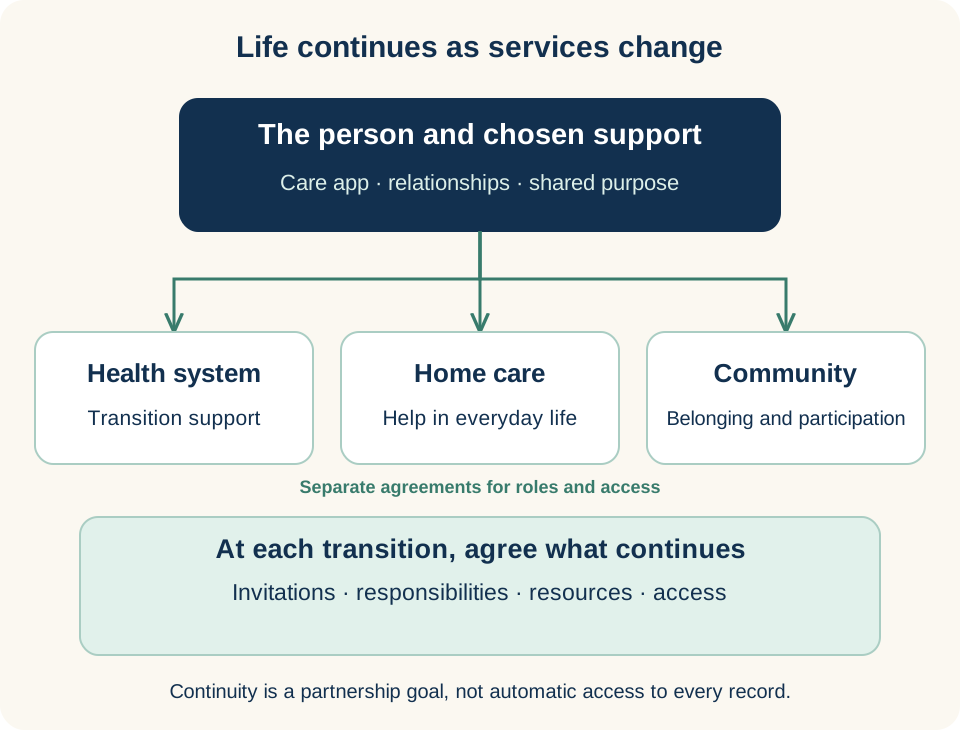
Conceptual continuity map. Relationships may continue as services change, while organizations retain distinct responsibilities and access boundaries.
- Ask which people, relationships, and resources the person wants to continue.
- Each partner agrees its role, what information is appropriate, and how access changes.
- Continuity is a partnership goal. This diagram does not promise automatic record sharing or unchanged access after every transition.
Invitations are the beginning of an agreement
The care app supports community memberships and invitation flows. An invitation gives someone a route to join the appropriate context; it should also help them understand why they are being invited and what role they are expected to have. The available roles and invitation authority depend on the configuration and the person’s circumstances.
An invitation to help with an activity should not quietly become a general assignment to manage care. A family relationship does not establish unlimited access. A supporter may be willing to receive a particular update while being unable to take on another responsibility. Clear language makes it easier to discuss these differences before frustration develops.
For Maya, the useful question is not simply whom she knows. It is whom she wants involved in a particular part of her support. Lena may help prepare questions for a visit. The neighbor may help with groceries. A professional may need information that neither supporter needs. Design the arrangement around those purposes and review it when the situation changes.
Participation without a family requirement
A partner can consider a direct participant experience, a family-inclusive community, or a combination suited to the service. The appropriate configuration depends on the audience, permissions, and operating model. The person should not be treated as an incomplete participant because they have no family member to invite or prefer not to involve one.
Where representatives or guardians have an authorized role, the partner must establish how that authority applies. Where a person can direct their own participation, design choices should support their understanding and agency. Avoid using a single family label to cover different legal, practical, and personal relationships.
The everyday experience also matters. Some people want frequent updates. Others need a quieter rhythm or a different way to receive information. A supporter may be comfortable with an app but need a clear human contact for questions. Configuration should begin with those preferences and the channels the partner can actually support.
Plan the transition before it arrives
At the beginning of a service, explain what participation means and what may change at the end. Review account access, organizational roles, shared resources, ongoing community involvement, and the process for questions. Where another partner will become involved, agree the handoff rather than assuming a shared platform makes it complete.
A practical transition conversation asks what the person wants to continue, which organization is responsible for the next step, and which information can appropriately accompany it. The team should also explain what will not continue. An honest boundary helps people plan; an unexplained loss of access can undermine trust even when it follows the contract.
The carePhysics connection
Make Belonging Practical and Build a Community That Can Follow Through connect the idea of continuity with actual support. A community is useful when people understand their roles, can communicate limits, and know how to respond when an arrangement changes.
For a partner, this means looking beyond successful enrollment. Ask whether people can find help during a transition, whether commitments have receiving owners, and whether a supporter can revise an agreement without feeling judged. Those are important parts of a continuing relationship.
Where AI helps
AI can help a team draft a transition checklist, simplify an approved explanation, or prepare questions for a person and their supporters. A summary may help authorized staff review a situation, provided its sources and limitations remain visible and a person checks it.
AI should not decide that information can cross an organizational boundary, expand a family member’s permissions, or infer agreement from participation. People and accountable organizations establish those conditions. The assistant can support a clearer discussion of them.
Bring your knowledge
Map one real transition in your service, using no identifying details in an open workshop. Identify the relationships that should continue, the access that changes, and the responsibility for explaining that change. Ask a participant or supporter what they would need to understand before feeling comfortable with the arrangement.
Explore further — Questions for a continuity agreement
Ask which membership and account arrangements apply after the service ends, how a new partner is introduced, how invitations and permissions are reviewed, and how someone can obtain help with access. Discuss records and export arrangements separately from the social experience of remaining connected. Confirm the answers in the applicable implementation and partnership terms before presenting continuity as a service promise.