8. Content people can do something with
A resource becomes useful when someone can connect it with their own next step.
From a library to a helpful moment
A home-care team has a thoughtful video about preparing for a first visit. The video answers many questions, but people still call with the same uncertainties. Some never see it. Others watch it without knowing which parts apply to them. A few need a written version they can share with a supporter.
The problem may be the arrangement around the content. A resource needs a relevant introduction, a manageable format, and a useful next step. It may also need a place for someone to say, “That does not fit my situation.” Those are design choices a partner can make.
genus supports content and media within broader experiences. Articles and videos can be presented with interactive elements and connected to pathways or conversations. The content delivery system gives partners ways to arrange material for an audience; the partner’s knowledge gives that material purpose and meaning.
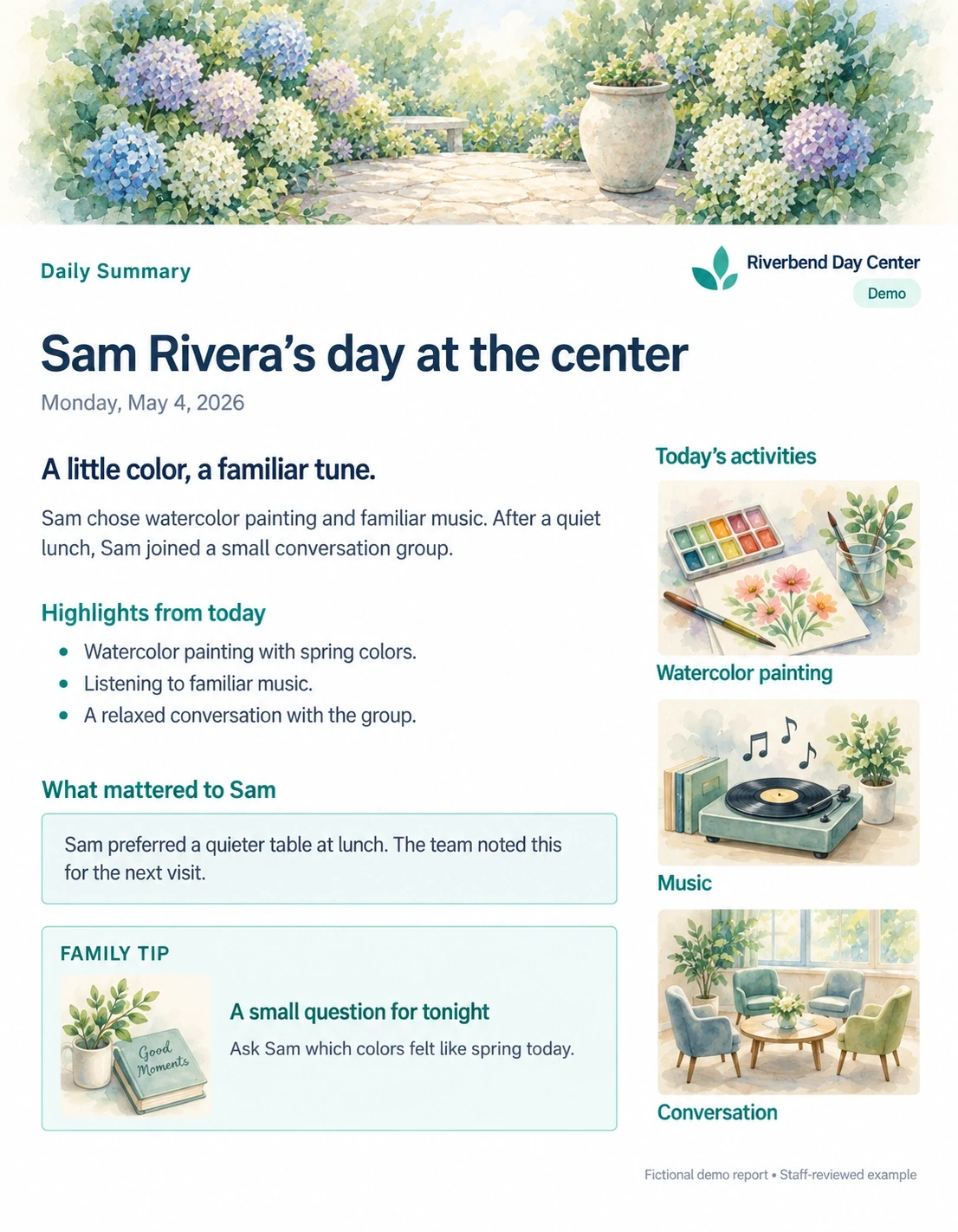
Existing fictional demonstration, labeled as a staff-reviewed example. The screen shows one possible communication pattern, not an automatically generated clinical record.
- Highlights give a supporter something specific to ask about.
- What mattered to Sam preserves a preference the team can consider next time.
- The family tip offers a small next conversation connected to the day.
Design a small, complete interaction
Consider a short preparation resource. It could explain what a first visit involves, show a brief video, ask which part the person wants to discuss, and provide a clear contact route. The interaction is complete when the person understands something useful and knows what happens next.
Interactive elements should help that understanding. A reflection, choice, or question can invite participation. It can also become unnecessary work if the organization asks for information without using it. Explain why a response matters and show what the person can expect in return.
The system can bring different content objects together, but the team should choose each object for a reason. An article may provide detail. A short video may make an unfamiliar experience easier to imagine. An interactive question may reveal a concern. A conversation may be needed when the answer depends on someone’s circumstances.
Match with care
Matching a resource to an audience means considering relevance, timing, language, format, and the intended action. It also means deciding what information is appropriate to use for that match. Partners should be able to explain why a resource appears without relying on assumptions that the person cannot see or correct.
Start with clear, reviewable choices. A person has asked about transport. A team has invited participants to prepare for an activity. A pathway has reached a step where a particular explanation is useful. These are understandable reasons to offer content. More complex personalization needs its own evaluation and governance.
Keep room for people to choose another route. Someone may prefer a shorter explanation, already know the material, or need support beyond what the resource covers. Completion should not become the only acceptable response.
The carePhysics connection
Engagements — Make Each Interaction Worthwhile helps connect content with value for the person receiving it. The reference companion also discusses ARCS, a model that considers attention, relevance, confidence, and satisfaction in learning design.
Those ideas can guide questions without turning every resource into a lesson. Does the opening make the purpose clear? Does the example feel relevant? Can the person try a manageable next step? Is there a useful response when they participate? The answers matter more than adding another media format.
Where AI helps
AI can assist with drafting, organizing, and adapting content for review. It may propose a shorter explanation, extract questions from approved material, or help connect a resource with an audience’s stated needs. A team can use these drafts to keep a conversation moving while it develops the final experience.
Review should cover accuracy, tone, permissions, accessibility, and the limits of the resource. Clinical material needs the appropriate clinical review. Translation or reading-level adaptation should preserve meaning rather than simply sound fluent. Approved source material and a responsible editor remain central to the work.
Bring your knowledge
Choose a resource people already ask for. Write down the moment when it is useful, the question it answers, and the next step it supports. Then test the smallest interaction that can accomplish that purpose.
Watch for the point where a person hesitates or asks for something the resource does not provide. That moment may suggest a better explanation, a different format, or a human handoff. Record the lesson with enough context that another team can understand why the change helped.
Explore further — Keep content maintainable
Every published resource needs an owner and a way to be reviewed or retired. Record its audience, source, approval status, intended use, and review date. Note any limits on reuse. When a service changes, update the resource and the pathways that depend on it. A useful content library is a maintained body of knowledge, supported by a process that helps people notice when something no longer fits.