10. From an interaction to a supported pathway
A next step is useful when someone can take it and knows what follows.
Connect the moments
An invitation asks someone to attend a community activity. The person accepts, but still needs to understand the location, arrange transport, and know whom to meet. After the visit, they may want to ask a question or decide whether to return. The invitation is one moment in a larger experience.
A pathway connects preparation, participation, reflection, and follow-through. The portal supports creating, managing, and placing selected pathways into one or multiple selected communities. The partner supplies the purpose, resources, sequence, and responsibilities; the team checks that each community receives an appropriate starting point.
A pathway should make the next step easier to understand. It should also leave room for a person’s circumstances to change. Someone may need a different explanation, a pause, or a conversation instead of another automated prompt.
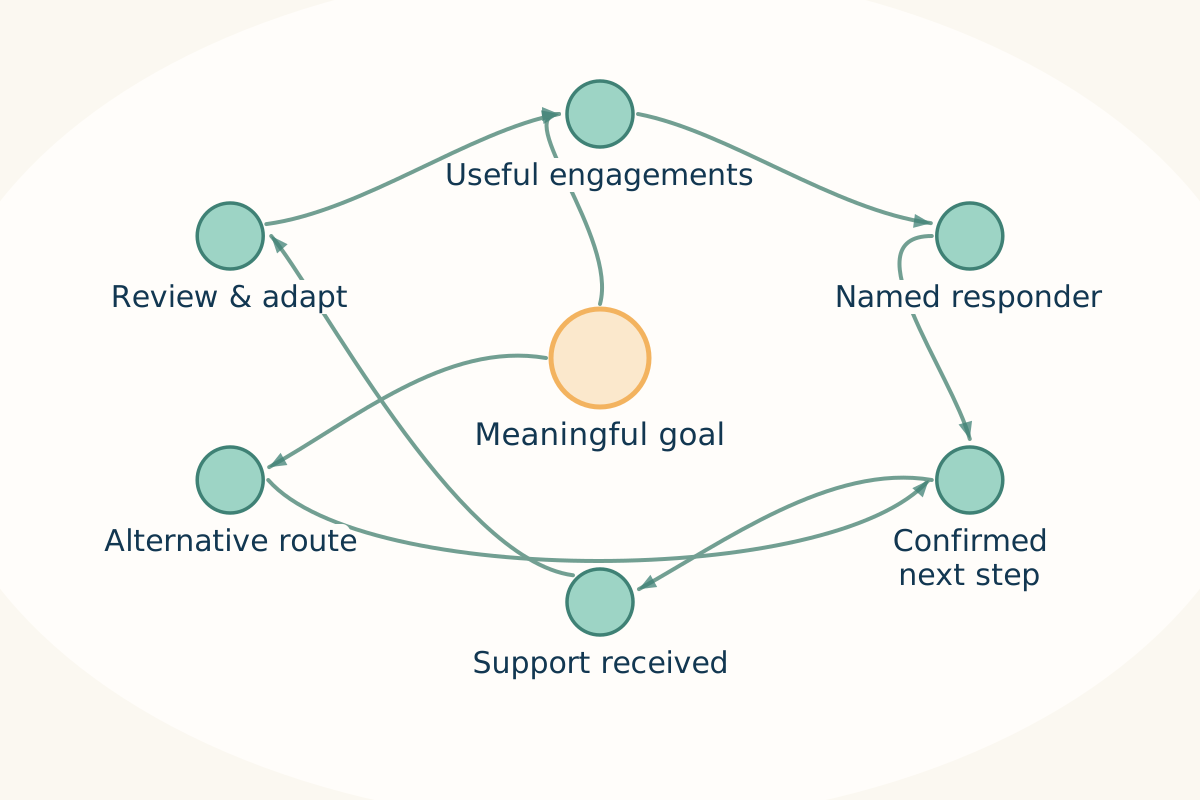
Connection map reproduced from carePhysics 3.7, chapter 7. The pathway connects interactions with responsibilities and support, including an alternative route.
- Start with an outcome that matters to the person, then choose useful engagements.
- A named responder confirms the next step; sending a message alone does not complete a handoff.
- Review what support was received and adapt the route when the arrangement does not work.
Start with a meaningful outcome
Describe what should become possible for the person. “Feel prepared for a first visit” gives a team a clearer design direction than “complete five screens.” The experience may include several screens, but their value comes from the understanding and support they provide.
Work backward from that outcome. What does someone need to know? What practical support might be required? What can the person choose? Who will help if a step is difficult? A first draft can be simple enough for participants and staff to discuss together.
Campaigns can invite an audience into a pathway. Content can support individual steps. Community participation can provide encouragement or practical help. The combination should remain understandable: people should know why they are receiving something and what responding will do.
Plan the exceptions as carefully as the usual route
A person who does not respond may need a different approach, or may prefer not to continue. A person who responds with a concern may need a human conversation. A service may have changed since the pathway was written. These are ordinary possibilities that deserve an agreed response.
For each important step, identify what happens if it is missed, declined, or no longer relevant. Decide whether the appropriate response is a pause, an alternative, or a staff review. Avoid treating every absence as a request for another reminder.
The pathway also needs an end. Explain what has been completed, what support remains available, and how someone can return or ask for help. A thoughtful ending respects the person’s time and makes the next relationship clearer.
The carePhysics connection
Pathways — Turn Good Intentions into Supported Progress provides the main bridge. Begin with One Meaningful Pathway offers a practical way to begin without trying to redesign an entire service at once.
Backward design starts with the intended result and works toward the experience needed to support it. COM-B can then help a team examine whether people have the capability, opportunity, and motivation for a particular step. Used together, these questions help identify when the missing piece is support rather than another message.
Where AI helps
An assistant can help turn a team’s description into a draft sequence, identify unclear transitions, or suggest questions for participant review. It may help prepare alternate wording and summarize feedback so the next version can be discussed sooner.
The team needs to verify the pathway’s logic, content, access arrangements, and human handoffs. A plausible sequence can still depend on unavailable transport, an unanswered inbox, or a service that does not accept the intended audience. Those are operational facts the partner must bring to the design.
Bring your knowledge
Choose a pathway with a clear beginning and a manageable ending. Invite the people who deliver it and the people it is intended to support to examine a draft. Ask what feels unnecessary, confusing, missing, or difficult to fit into an ordinary day.
Agree on a small set of proposed measures. Include something about the person’s experience and something about the team’s ability to follow through. Review participation alongside those measures. A high completion rate is useful only in the context of what the pathway was meant to help people achieve.
Explore further — A pathway rehearsal
Before release, walk through the pathway using fictional situations. Try the usual route, a declined invitation, a missed step, a question the content cannot answer, and a change in service availability. Confirm that each situation leads somewhere understandable. Invite someone outside the design team to try it as well. Their questions often reveal assumptions that a familiar team no longer notices. Record the changes and repeat the rehearsal when the pathway changes substantially.