13. Example use cases
The features become useful when local knowledge gives them a purpose.
What organizations can learn across the whole journey
Better care. Time returned to people. A stronger organization.
An organization needs to know whether the whole experience improves its bottom line. Better quality, less duplicated work, prepared staff, appropriate referrals, and relationships that last are routes worth testing. A key performance indicator, or KPI, connects a benefit people recognize with an operational change and a result the organization can verify. The connection must be measured, not assumed.

- Participants: useful support and a sense of purpose.
- Families: clearer next steps and less repeating.
- Staff: preparation, support, and time to connect.
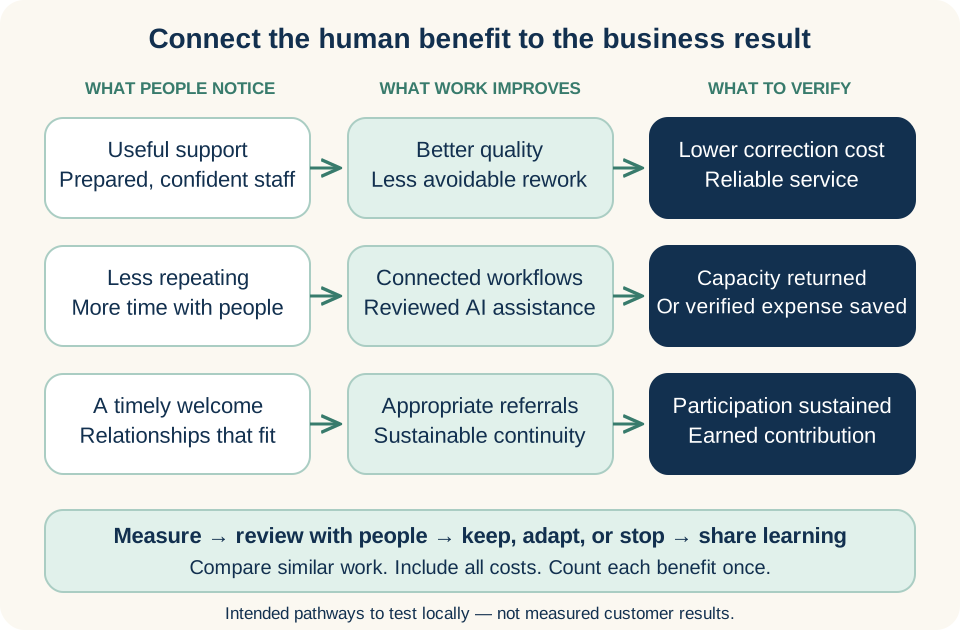
A value map for discussion, not a chart of measured returns. Each connection is a hypothesis to check in a partner’s own workflow.
- Quality and preparation: support people find useful, with staff ready to act, can reduce avoidable corrections. Verify the experience and the cost of rework.
- Efficiency: connected work and reviewed AI assistance can return time to people. Check complete staff effort; extra capacity becomes cash savings only when expense actually falls.
- Access and continuity: timely responses and relationships that fit can support appropriate participation. Verify contribution after delivery costs; include implementation costs and count each benefit once.
- Referrals and access: useful responses and appropriate first services; fewer opportunities lost between inquiry and welcome.
- Training and readiness: current learning applied in practice; less avoidable correction and repeated supervision.
- Participant continuity: support that continues to fit; fewer avoidable departures, with healthy transitions recognized as successes.
- Staff continuity: sustainable work and support; reduced disruption and recruitment burden where verified.
- Partner relationships: shared commitments and accepted handoffs; dependable routes into and between services.
- Community connection: useful relationships people confirm; stronger support around participation.
- Connected, personalized workflows: accurate, relevant support and completed responsibilities; better quality across the whole journey.
- Efficiency and time returned: total staff effort, waiting, and rework; capacity that can serve people or reduce actual expense.
- Learning loops and capturing wins: reviewed ideas tested and decisions shared; useful improvements carried forward.
AI assistance across a connected workflow
A need is expressed → the right person receives it → relevant support is prepared → people review and act → experience is shared → the next interaction improves.
AI can help personalize approved resources, organize permitted observations, and prepare drafts across the workflow. People review meaning, accuracy, permissions, and consequential actions. Measure the complete effort, including those checks and corrections, rather than draft-generation speed. Connected work still needs responsible people and agreed access.
Choose a small scorecard using the Organization KPI definitions. Pair quality and experience with time, service, and financial evidence. Capacity returned is not automatically cash saved. No combined score should rank families, participants, or staff.
For oversight across departments and locations, use common definitions and review periods while preserving local context. Show which services and records are included, missing, or not comparable. Combine compatible underlying counts rather than averaging percentages. The central coordination discussion connects those measures with shared knowledge, distribution, and learning.
Agree the value before measuring
Use this checklist in a partner conversation. Ticks are temporary, remain in this browser, and are not sent anywhere.
For a first scorecard, choose one quality measure, complete-workflow effort, an access or continuity measure, and verified financial value. Record baseline → current result → difference → quality check → next decision. Use “not yet measured” where evidence is missing.
Day Center: from first contact to what comes next
Read the three-page Day Center executive brief for the value, connected workflow, and starting KPI scorecard, with a downloadable PDF.
Sam enjoys gardening and having something useful to contribute. Before a first visit to the fictional Riverbend Day Center, Sam and family member Jamie want to know whether there will be room for those interests. Jamie also hopes for something more helpful than knowing that Sam attended: a little understanding of the day, and a way to share what happens at home.
Their story follows an end-to-end workflow and ecosystem across public resources, the partner portal, the care app, and human conversations. Riverbend brings its governance, care strategies, approved knowledge, and communication style. Those contributions shape the experience: a welcoming introduction, preparation that starts with the person, clear review responsibilities, and updates families can use.
All six cases in this chapter are fictional configurations for discussion, not customer results. Riverbend and Sam also appear in the book’s demonstration screens; the gardening story is an invented illustration, not an account shown in those screens. The partner must agree which capabilities, integrations, and operating responsibilities apply. The examples show people making connections, rather than assuming software completes every handoff.
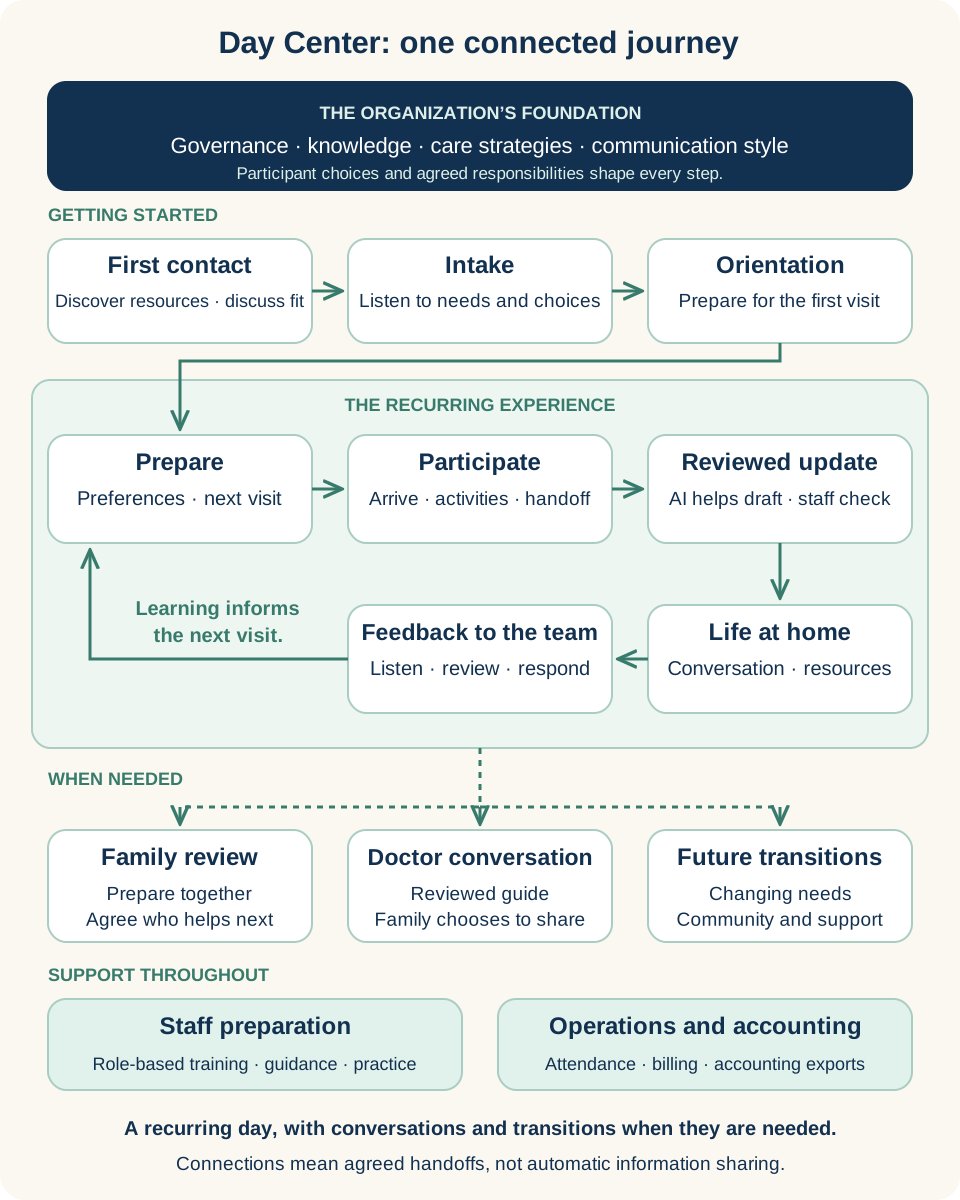
An illustrative Day Center configuration. Daily participation repeats; family reviews, doctor conversations, and transitions happen when needed. Connections represent agreed responsibilities, not automatic information sharing.
- Getting started connects first contact, staff-led intake, and orientation around participant choices and the organization’s knowledge and communication style.
- The recurring experience connects preparation and participation with a staff-reviewed update, life at home, and feedback considered by accountable people before another visit.
- Family reviews, family-chosen doctor conversations, and future transitions are separate branches used when needed; they are not mandatory stages after each visit.
- Role-based staff preparation and operational work, including attendance, billing, and accounting exports, support the experience throughout.
Finding a starting point
Jamie finds Riverbend through a community introduction. Its website and public resources explain the program, the people who welcome participants, and how to contact the team. A configured information assistant can help locate approved answers. Jamie asks whether Sam could contribute to activities as well as join them. A staff member discusses the question with Sam and the family, explains the support available, and agrees the next conversation. That exchange begins a relationship before a form is completed.
Intake and understanding
Staff work through the Adult Day intake with Sam and those appropriately involved, bringing together preferences, practical needs, health and daily-living information, family circumstances, and communication choices. Sam mentions gardening; Jamie explains what support the family can offer. Staff check their understanding with Sam and agree who may participate and receive updates. The interest becomes context for planning, rather than a label that determines every activity. This example uses staff-led intake; independent completion at home remains a separate capability to confirm.
Orientation and preparation
The coordinator explains the first visit and offers the family a relevant preparation resource through the care app’s Family Guide, with a printed explanation or conversation when preferred. Riverbend’s welcome practice asks staff to learn what someone hopes to enjoy, not only what assistance they need. Role-based learning, local procedures, and practice prepare staff and volunteers to use that approach. Before the visit, the responsible team member checks Sam’s preferences with the activity lead and discusses a suitable opportunity to contribute. This is a deliberate staff handoff.
The daily experience
The team checks the roster and expected visits, then records Sam’s arrival and attendance. A reservation expresses a plan; check-in records what happened. During a suitable gardening activity, Sam chooses to help and shares a familiar tip. Staff notice the contribution alongside participation, meals, rest, and other observations. They ask what Sam enjoyed instead of assuming the activity was successful. At departure, the appropriate check-out record accompanies a human handoff. The portal demonstration shows how practical cues can remain visible while people do this work.
A story worth sharing
A staff observation gives the designated reviewer something specific to work with: Sam contributed a gardening tip and enjoyed discussing it. AI assistance can help organize recorded material into a daily-summary draft. The reviewer checks accuracy, tone, recipient, and suitability, removes unsupported conclusions, and adds a personal note before sharing through the agreed route. Riverbend’s communication style favors a recognizable moment over a generic report that everything went well. The daily-summary example illustrates draft review and family sharing; it does not contain this invented gardening account.
Connected life at home
Jamie reads the reviewed update in the care app and asks Sam about the gardening conversation. It opens a moment they can share. Relevant education and resources can also help the family prepare for another visit. Email or printed summaries can support other preferences. Jamie contributes a short response through a supported family-feedback route. Riverbend assigns someone to review those responses and bring useful context to the team. Where meeting tools are configured, invited people can also connect in a family meeting room, with attendance and purpose agreed beforehand.
Family reviews and doctor conversations
A family review can bring selected observations together with Sam’s priorities and Jamie’s questions. Staff prepare the overview; people correct the picture and agree who will follow through. If a doctor conversation would help, a separate reviewed guide can organize relevant observations and questions the family chooses to take. It supports communication, rather than replacing a medical record or assessment. It is not automatically sent to a doctor. The family decides what to share afterward. These conversations happen when useful, rather than forming compulsory steps after every visit.
Keeping operations connected
Behind the visit, attendance, charges and their reasons, recorded payments, credits, statements, receipts, and daily closeout support the center’s work. The person responsible for billing checks discrepancies; supported ledger exports can feed an agreed accounting process. This is billing and accounting support, not a replacement for every finance system. Riverbend assigns operational responsibilities so an unresolved record has somewhere to go. The same principle applies to a family question: reliable follow-through depends on someone knowing it is theirs to address.
Changing needs and future transitions
Sam’s interests, support needs, or preferred schedule may change. The family might explore another community activity, additional help at home, or a different service. Reviewed information and relevant resources can support those conversations. Riverbend and the family agree what to share, who receives a handoff, and which care-app relationships can continue. Community centers, volunteers, home-care organizations, and other partners may contribute. Continuing relationships are the aim; access to another organization’s information and responsibility for a new service require their own arrangements.
Learning travels back into the experience
The staff member reviewing Jamie’s response brings it to the activity lead before Sam’s next visit. Sam is asked whether another opportunity would be welcome. A family observation has reached a person able to act on it. It has not automatically changed a care plan or become a claim about an outcome.
That same habit can improve the service. If families repeatedly struggle with a welcome instruction, the team can revise the approved explanation and check whether it helps. Listen, prepare, review, try, and learn together applies to content, pathways, staff learning, and ideas for new tools. Learning belongs in the next conversation, not only in a dashboard.
The carePhysics connection
Make Belonging Practical frames a welcome where Sam can contribute. Pathways connects an invitation with practical support and ownership. Begin with One Meaningful Pathway helps the team choose a manageable first test. Riverbend’s knowledge makes those ideas local: appropriate activities, useful language, realistic commitments, and staff who understand the people they serve.
Day Center — measures to learn from
Track intake-to-first-attended-day, appropriate participant continuity, and total staff effort per reviewed family update alongside its usefulness. An intake date is not a referral date. Jamie gains a conversation; staff can examine rework and time available for people. Use the shared definitions to test whether service continuity or verified costs change. This story demonstrates no measured saving.
Explore further — Start with one connected day
Rehearse a small version before attempting the whole arrangement: preparation, one visit, one reviewed update, one family response, and a staff follow-up. Use fictional information and include someone who does not use the app. Name who prepares, checks, shares, receives, and responds. Confirm the configured tools and any manual handoffs, the agreed communication route, and how an urgent concern reaches a person.
Ask whether Sam recognizes the account, whether the family finds something useful in it, and whether feedback reaches someone able to respond. Can staff complete those steps without unnecessary duplicate work? Review the answers together before extending the workflow to meetings, accounting connections, or transitions. These are questions for a purposeful test, not promised improvements.
Five shorter configurations
The following cases use the same pattern at a smaller scale: a person’s purpose, the partner’s contribution, connected steps, responsible AI assistance, and a question worth learning from. Each is a proposed arrangement to rehearse with the people involved. The mix of tools changes with the service; the need to listen and follow through remains.
A health-system transition home
Maya is preparing to leave hospital. Her sister Lena can help for a few days, and a home-care organization expects to make its first visit. Maya wants clear next steps without organizing every conversation herself. Lena needs to understand what she can reasonably take on.
The partner’s contribution. The health system brings its discharge process, approved education, and escalation instructions. The receiving organization brings visit preparation and a contact process. Maya’s preferences and Lena’s capacity help shape the arrangement. A preparation pathway, selected resources, an appropriate care community, and portal tools connect the agreed work. Access to clinical records requires a separate integration and access agreement.
The handoff. In the rehearsal, Maya asks what to prepare for the first visit. The question reaches an inbox, but neither organization has agreed who will answer. The receiving team names a contact, explains the route if the question remains unanswered, and checks that Maya understands it. A message becomes useful when someone accepts responsibility for the next step.
AI assistance and review. AI could help prepare a plain-language draft from approved information or organize questions for review. An appropriately authorized professional checks clinical information and consequential advice before use. Separate organizations’ records and family access are not silently combined.
What to learn. Can Maya explain the first agreed step and where to ask for help? Does the receiving contact recognize the handoff? Consider the teach-back approach alongside supported pathways. Check the work created for staff as well as clarity for Maya and Lena. Agree which community connections and organizational access can continue when the service changes.
Health-system transition — measures to learn from
Track accepted handoffs, eligible referrals reaching first service, and staff effort spent resolving incomplete handoffs. Check Maya’s understanding alongside them. Clear ownership may reduce chasing and lost service opportunities; measure both rather than assuming savings. Use the shared definitions, keeping pending referrals and missing feedback visible.
A home-care organization supporting a family
Read the three-page Homecare executive brief for the connected workflow, practical benefits, and starting KPI scorecard, with a downloadable PDF.
Noah lives with a disability and wants support that fits around work and friendships. His father helps with some practical tasks, and his cousin visits occasionally. The home-care team provides an agreed service. Noah does not want every supporter involved in every part of his life.
The partner’s contribution. The organization brings knowledge of visit arrangements, service boundaries, preparation, and how to communicate changes. Noah explains what makes help welcome. A care community, selected resources, supporter preparation, and portal workflows can support that agreement. Family involvement follows Noah’s choices and the appropriate access arrangements.
The handoff. Noah’s cousin can no longer help at the usual time. Rather than repeating a reminder, the coordinator discusses the change with Noah and clarifies what the service can provide. They agree a realistic next step and tell the people affected. The updated agreement matters more than whether the original task was completed. Noah should not have to retell the change to every person involved; the coordinator confirms who needs the agreed update and who will make that contact.
AI assistance and review. AI could help draft a clearer explanation or an alternate version of a preparation resource. Noah and the team review whether it preserves his meaning and fits the actual service. A draft does not reassign staff, expand the service, or commit a family member to help.
What to learn. Are responsibilities clearer without reducing Noah’s choices? Can someone discuss changed capacity without being treated as unhelpful? Self-Determination Theory brings attention to choice, confidence, and connection; social support asks what help is actually available. Review unwanted messages, repeated explanations, and whether Noah knows whom to contact when the arrangement stops fitting his life.
Home care — measures to learn from
Track appropriate participant continuity, follow-through on changed arrangements, and total coordination effort per completed change. Ask Noah whether his choices were preserved. Less repeated explanation could return staff capacity while dependable support sustains the service. Verify that connection with local records and the shared definitions; unsuitable retention is not success.
A community organization opening a path to participation
Amara recently moved to the area and hopes to meet people through music. A local program sounds interesting, but she is unsure whether the entrance is accessible or whether someone will welcome her. A volunteer recognizes both questions from earlier conversations.
The partner’s contribution. The organization brings local knowledge of activities, accessibility, volunteers, and actual capacity. A public wall or interactive landing page can offer an introduction, a short video with a text alternative, and a route for questions. A preparation pathway can help with a first visit; community participation can follow if useful and chosen.
The handoff. The existing invitation says little about arrival. The volunteer brings Amara’s question to the program lead. Together they prepare a clearer explanation, confirm a welcome contact, and check with Amara whether anything is still missing. The revised resource can help other newcomers too. The team also names who will keep arrival information current, so a changed entrance or contact does not leave the next visitor facing the same uncertainty.
AI assistance and review. AI could help organize recurring questions or draft alternatives from approved local information. Staff verify the details before publishing. An assistant cannot promise an available place, ride, or volunteer simply because someone asks for one.
What to learn. Can Amara picture the first visit and reach a person if needed? Is she comfortable choosing not to attend? Make Belonging Practical connects the welcome to participation; Social Cognitive Theory invites consideration of a relatable example. Ask what felt helpful or unclear, including when someone decides the activity is not a fit. Set response expectations and community rules before expanding the invitation.
Community participation — measures to learn from
Track response time, person-confirmed welcome connections, and staff effort answering repeated arrival questions. Ask whether Amara felt welcome. A clearer explanation can be tested for useful participation and less repeated work. The shared definitions distinguish a chosen nonattendance from an unanswered invitation; attendance alone is not value.
Independent living: belonging on your own terms
Rosa has moved into an independent-living community. She wants to meet neighbors through a book group while keeping her own schedule. Her family is interested in how she is settling in, but Rosa wants to decide what she shares and which invitations she accepts.
The partner’s contribution. The community brings its activity information, local resources, welcome practices, and knowledge of residents’ interests. An orientation pathway and selected content can introduce the people and places Rosa may find useful. Public resources, an appropriate community space, and portal content tools support the proposed arrangement. Participation and family involvement remain choices to discuss with Rosa.
The handoff. The book-group invitation gives a time and room but leaves Rosa wondering whether newcomers need to have finished the book. She asks the welcome coordinator, who checks with the host and provides an answer. With the host’s agreement, the coordinator updates the invitation for future newcomers. Rosa can decide whether to join without having to guess what will be expected. If she declines this time, the coordinator can ask whether she wants information about a future meeting rather than interpreting silence as a request for more reminders.
AI assistance and review. AI could help the coordinator draft clearer orientation content or summarize common questions for a human reviewer. The host checks practical details and commitments before the resource is shared. The example uses shared communication and content capabilities; it does not assume a specialized independent-living management system.
What to learn. Did Rosa get the information she needed while retaining control over participation and family updates? Use Self-Determination Theory and Make Belonging Practical to discuss choice and welcome. Ask whether the experience helped her connect on her terms, rather than treating attendance alone as success.
Independent living — measures to learn from
Track useful introductions, responses completed, and effort resolving repeat orientation questions, alongside residents’ reported choice. Rosa gets clarity; the team tests whether improved invitations reduce rework. These may support a stronger resident experience, but do not establish occupancy or retention gains. Use local records and the shared definitions.
Assisted living: familiar routines, connected support
Read the three-page Assisted Living executive brief for the connected workflow, resident and staff benefits, and starting KPI scorecard, with a downloadable PDF.
Daniel is settling into an assisted-living setting. He values a quiet start to the morning and enjoys conversation later in the day. A family member wants to contribute what has helped at home. Daniel wants staff to ask him directly, even when someone else knows his history well.
The partner’s contribution. The organization brings its welcome process, agreed service responsibilities, communication style, and staff preparation. Daniel’s preferences and his family’s observations inform orientation resources and appropriate team conversations. Selected content, an invited care community, and portal tools can support this arrangement, with sharing agreed for each audience.
The handoff. During settling in, an invitation arrives at a time Daniel finds difficult. The family mentions the pattern to the agreed contact, who asks Daniel what would work better and brings his preference to the responsible team member. They agree an adjustment within the service and a time to check back. The family receives the appropriate update without becoming responsible for directing staff. The discussion also gives the team a practical question to include in future welcomes: when does a person most enjoy conversation or activity?
AI assistance and review. AI could help prepare a draft welcome resource or organize questions for a family review from approved, appropriately shared information. Staff check the account with the people involved before using it. This communication example does not assert medication administration, clinical charting, emergency monitoring, or specialized facility-management functionality.
What to learn. Does Daniel feel heard, and do staff know who will follow through? Has the family gained a useful route for questions without receiving information beyond the agreement? Social support and Pathways help frame reliable help and clear responsibility. Periodic review should revisit the arrangement as preferences or needs change.
Assisted living — measures to learn from
Track observed staff readiness, preferences followed through, and total effort completing reviewed family updates, alongside communication usefulness. Daniel should recognize the support; staff should have less avoidable correction. Test those connections before attributing financial benefit. Individual learning records alone do not establish readiness. Use the shared definitions and local review.
Bring your knowledge
Choose the example closest to your work and replace its assumptions with your people, resources, and commitments. Ask participants and frontline staff where the sequence would break down on a busy day. Begin with one useful connection, name its owner, and agree what you will review together. Use Begin with One Meaningful Pathway alongside the partner worksheet. The aim is an arrangement people can recognize, use, and improve together.