
genus perspective
A progress report should tell us what changed for people
A federal caregiver-strategy progress report records work completed and underway. It also invites a useful distinction: activity accomplished is not yet the same as a change people can experience.
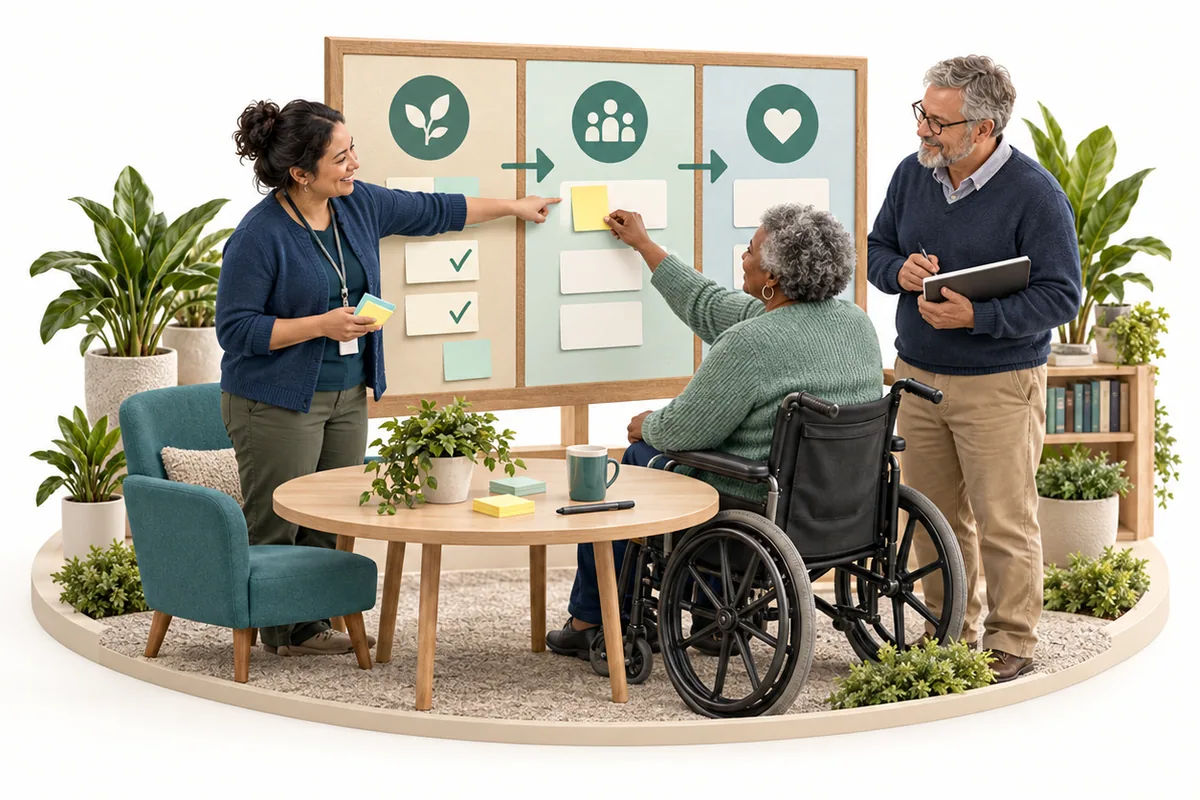
What the progress report tells us
In September 2024, the Administration for Community Living released a progress report on federal implementation (opens in a new tab) of the National Strategy to Support Family Caregivers. Its announcement described actions that:
“have been completed or are in progress”
— Administration for Community Living, September 2024
This is information about implementation activity. It does not establish that every caregiver can access a particular service, or that each completed action produced an individual outcome. Both the work and its limits deserve an accurate account.
For local service leaders, the report offers a useful prompt to examine what their own progress updates mean.
Look at the space after “completed”
Consider a hypothetical community organization that has finished preparing a new caregiver resource collection. The pages are reviewed, the links work, and staff have received an announcement.
That is real work worth recognizing. It does not yet tell the team whether people can find the collection, understand its offer, or reach suitable help through it.
A progress report can hold these facts together. The resource is ready. Its usefulness is still being examined. There is no need to turn one milestone into a larger claim to make the effort sound worthwhile.
Describe the change you intended
Before choosing a measure, return to the purpose. Was the aim to make an existing service easier to discover, reduce repeated explanations, or help someone prepare for a conversation?
A clear purpose makes it easier to decide what evidence is relevant. Page visits might say something about reach. They cannot tell the team whether a participant found the right contact or felt comfortable using the information.
Ask a small number of focused questions that people can answer from their experience. Avoid asking participants to judge broad organizational success when they only encountered one part of the service.
Make room for mixed findings
The resource may be useful to some people and difficult for others. A family member may appreciate the overview while a participant needs a different format or more direct assistance.
Report those differences without treating them as inconvenient exceptions. They can point to the next practical improvement.
Staff observations also need context. A colleague’s account of fewer repeated questions is worth exploring, but it is not automatically evidence of a measurable reduction across the program. Be clear about whether a finding is an observation, a pattern in collected feedback, or the result of a formal evaluation.
Let the report lead to a decision
A useful review should help someone decide what happens next. Perhaps the organization needs to revise an explanation, confirm partner capacity, or offer another way to ask questions.
Name the owner of that next action and the point at which it will be reviewed. Otherwise, a thoughtful finding can become another paragraph in next month’s report.
Keep unfinished work visible. A status that says “ready for initial use; feedback underway” may be more informative than a green completion symbol with no explanation of what was actually completed.
Ask people about the part they experienced
Participants and caregivers do not need to understand the organization’s reporting system to contribute. Ask about a specific moment: finding the information, choosing an option, or reaching the person named.
Make participation voluntary and suitable for the audience. A brief private conversation may be more useful than a long survey, particularly when someone is already managing many demands.
Tell contributors what you learned when it is appropriate to do so. Their feedback should help shape the next version, not simply decorate a report with a favorable sentence.
How genus can support the work today
Today, genus content and pathways can organize prepared resources and selected steps for an audience. Configured care experiences can also provide program updates and appropriate conversations around that content.
Those capabilities do not establish that a resource improved an outcome. The organization must decide what to examine, gather suitable evidence, and interpret it responsibly.
At genus, we see value in making the intended next step clear enough to review. When people know what an offer is meant to help them do, their experience can inform a more useful discussion about progress.
Choose a reporting rhythm that leaves time to respond. Collecting feedback more frequently than the team can consider it creates work for participants without necessarily improving the service.
A question before the next report
Which part of our update describes work completed—and which part tells us what changed for the people it was meant to help?
Supporting references
- HHS Releases Progress Report on Federal Implementation of the National Strategy to Support Family Caregivers (opens reference preview; direct link opens in a new tab)
Administration for Community Living · 2024-09-17
The September 2024 report describes federal actions to implement the National Strategy to Support Family Caregivers. It helps distinguish progress on commitments from evidence of support reaching individual families.


