
Accessibility in everyday use
Clear language, readable content, and understandable navigation help make participation easier. Accessibility is part of the design work across the experience and the resources people share.
Engagement overview
It begins with understanding what matters to someone and why. From there, we find the how: a manageable next step, a shared purpose, and space to talk about what might be getting in the way.
Human connection
Sometimes the obstacles go unspoken: fear of technology, worry about conflict, complicated family relationships, or uncertainty about asking for help. Engagement means listening for those concerns and working through them together.
carePhysics
It translates behavioral science into clear, repeatable skills people can use in everyday moments of care.
genusAI
It helps us find clearer, kinder ways to express ourselves and learn along the way, while keeping human judgment and connection at the center.
Shared purpose
The magic is keeping it simple, giving it purpose, and starting with something we can believe in together: helping the person we care about live well.
Design
Good design helps people feel welcome, find their way, and take part with confidence. genusConnect is designed with accessibility in mind, alongside the everyday needs of families, caregivers, and the teams supporting them.
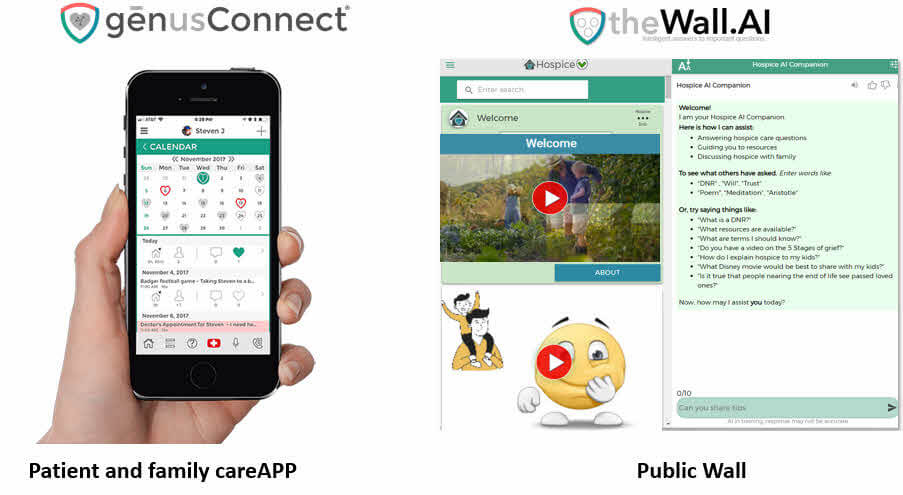
People can join through their browser without an app-store download. Guided tours and AI-assisted guidance help people understand supported features in the app and Partner Portal. Co-browsing lets people share the experience and work through a task together.
Clear language, readable content, and understandable navigation help make participation easier. Accessibility is part of the design work across the experience and the resources people share.
Open an invitation or link in a browser to get started. There is less to install and one less unfamiliar step between a person and their community.
Tours introduce the experience. AI-assisted guidance can explain supported pages and help people find a next step in the app or portal.
Co-browsing supports a shared walkthrough, so a family member or team member can help someone find their way while each person keeps their own access permissions.
Content
genus Tiles bring videos, audio, files, photos, questions, and interactive media together in one experience. They combine the familiarity of YouTube and social content with a purpose: something to learn, talk about, try, or enjoy together.
People can comment on content, watch videos together, give feedback, and take part in shared activities, including games. Content can be scheduled and shared with selected groups within a community or across communities where sharing is enabled and permitted.
Structured pathways give those moments a sequence. A video can lead to a question, a conversation, or an activity, followed by feedback and a chance to revisit what was learned. These learning loops make content something people participate in, rather than simply receive.
Teams can repeat a pathway, review what worked, and modify it for another department, audience, or need. The useful structure carries forward, with room to adjust the language, media, pace, and next steps.
Combine media, questions, and activities in a genus Tile around a clear purpose.
Invite a group to watch, discuss, play, or respond together, at a time that works for them.
Use questions, comments, and feedback to understand what helped and what needs another explanation.
Revisit the learning and adjust the pathway for the next group, department, or care need.
Humor
Warm, honest humor is woven gently throughout the genusConnect ecosystem. A familiar family moment, a playful activity, or a smile of recognition can help ease tension, support positive interactions, and invite self-reflection.
The aim is to laugh together, with kindness and good timing. Humor works best when it respects the person, fits the moment, and leaves room for an honest conversation about what matters.
Sometimes a little recognition is enough: the family has three different plans, six reminders, and a dog who has appointed himself head of sock collection. We can smile at the moment and then find the next step together.
Every family has a history
At genusConnect, we understand family dynamics. Whether you are a nurse helping a family, a social worker bringing people together, or a family caregiver finding your way, you are working with relationships as well as care needs.
genusConnect is designed to help improve communication and teamwork with practical resources, shared understanding, and a little humor when it helps. Sometimes recognizing a familiar family moment together makes a difficult conversation easier to begin.
Family dynamics are unique to every family. When we begin caring for an adult, familiar relationships can change. A parent may need support from a child. Siblings who have not spoken regularly may suddenly need to make decisions together. Old tensions and unspoken expectations can feel like a secret language everyone understands differently.
Care brings together people who can be supportive, frustrating, or both, often in the same day. Stress and family history can make working together difficult. With helpful guidelines and room for each person to contribute, this can also be a time to come together.
The person who seems strong may be struggling quietly. Someone who seems unsure may have a strength the family has not yet seen. Each of us needs the opportunity to give in the way we do best.

A little recognition. A little humor.
You may recognize some of the characters below. These are playful examples of roles people sometimes take, not fixed labels or judgments. One person may play several roles, and those roles can change.
Keeps an eye on costs and asks whether another option could work. Give Frank a clear picture of needs and tradeoffs so that careful budgeting supports the care plan.
Questions the plan and wants to know why. Clear explanations and a chance to ask questions can turn doubt into useful attention to detail.
Arrives eager to help and may feel guilty about being away. Changing the plan can feel like a way to contribute. A warm welcome, an update on what is already working, and a useful role can help Tammy support the team.
Loves to talk, visit, and participate. Conversation, stories, and companionship can be meaningful contributions, with responsibilities that fit her age and comfort.
Wants to lend a hand. A specific invitation, such as picking up groceries or joining a visit, helps Ned contribute within the boundaries the person receiving care is comfortable with.
Brings clinical knowledge and helps explain care needs. Sharing observations and asking clear questions can connect professional guidance with everyday family life.
Tries to keep the peace and coordinate it all. Jane needs support too: shared responsibilities and permission to take a break help keep the peacemaker from carrying everything.
A role for everyone
Start with the person receiving care: what matters to them, what they want help with, and who they want involved. Then make room for the different skills, limits, and perspectives around them.
The genusConnect ecosystem is built around this community of care. Shared information and clearer responsibilities can give people a place to contribute. genusAI can help a family member restate a need in a kinder, more cooperative way, while the people involved decide what feels right to say.
For example, “You never help” might become “I am finding evenings difficult. Could you take Tuesday dinner, or help us find another option?” The need stays honest, and the next step becomes easier to discuss.
Ready when you are
Book a 30-minute call. We set up a working preview under your name, with sample people and sample notes, so a scheduler, a nurse, and a family member can try real workflows before you decide anything.