
An app is something you use
A family member checks an update, a participant joins an activity, or a caregiver finds a resource. The app is their way into an experience.
Ecosystem
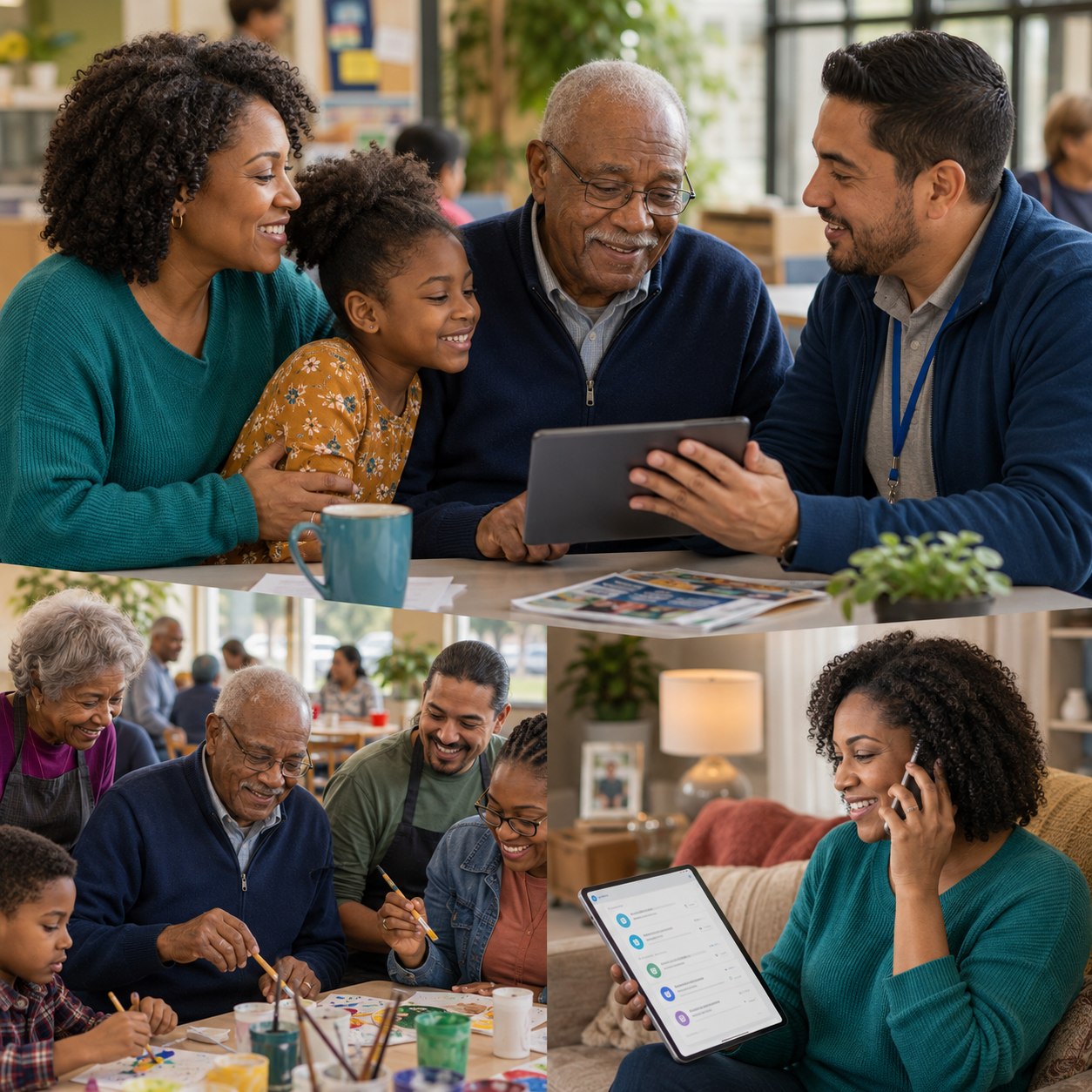
Care often involves people in different places, with different responsibilities. genusConnect® brings together tools that help participants, families, care teams, and community organizations stay connected. Each organization brings its own knowledge and priorities. The people using these tools help us understand what needs to improve.
App & platform
These words describe different parts of the same work. You might use an app every day without needing to think about the technology behind it. The ecosystem includes that technology, but also the people and organizations who put it to use.
A family member checks an update, a participant joins an activity, or a caregiver finds a resource. The app is their way into an experience.
The shared technology supports content, communication, program operations, and reporting. Tools can work together without every organization building them from the beginning.
People, organizations, services, and technology each bring something useful. Their experience, feedback, and ideas help shape how the tools develop.
People
Support looks different for each person. The starting point is their daily life, what matters to them, and the people they want involved. The connections below represent roles around that person, not shared access to every record.
Their preferences, relationships, and goals guide the work.
Stay in touch, share everyday knowledge, and help from near or far.
Bring practical support, professional judgment, and continuity.
Offer companionship, activities, local resources, and a sense of belonging.
Organize services and connect the right people around the program.
Organizations
A health system and a neighborhood day program may serve some of the same people, but they have different responsibilities. genusConnect can support connections around that shared work while each organization keeps its own mission and role.
These are possible contributions, not a list of existing partnerships. The tools, permissions, and system connections needed for a program are agreed with the organizations involved.
Bring clinical knowledge, patient education, and follow-up priorities.
Bring day-to-day experience, staff observations, and relationships with families.
Bring local knowledge, trusted relationships, activities, and practical services.
Help connect members with covered services and identify barriers to participation.
Support community priorities, help programs get started, and ask what is being learned.
Contribute compatible tools and technical expertise where a program needs them.
Tools
You do not need every tool to begin. Choose a useful combination for your team and the people you serve, then add to it when there is a reason to do so. Availability and configuration depend on the program.
Everyday updates, shared resources, and ways to take part.
Human-led conversations, live activities, and time together.
Resources and activities arranged around a person or program.
Staff coordination, day-center operations, dashboards, and reporting.
Device information and setup-specific connections to other systems.
Connected work
A resource becomes useful through the people who prepare it, choose when to use it, and respond to what happens next. These are connected steps, not a requirement to use every tool.
Organizations can contribute knowledge and approved reusable resources while participant records, family conversations and staff notes stay within their own permissions.
Authors and educators
Create and review a useful article, question, activity or piece of media. The result is a resource another person can understand and use.
Program staff
Select the resources, sequence and staff responsibilities that fit the people involved. A pathway can give prepared content an order and timing.
Staff, participants and families
Help people enter the appropriate care community, resource wall or session. Agree who needs access and what they should be able to see.
Participants and facilitators
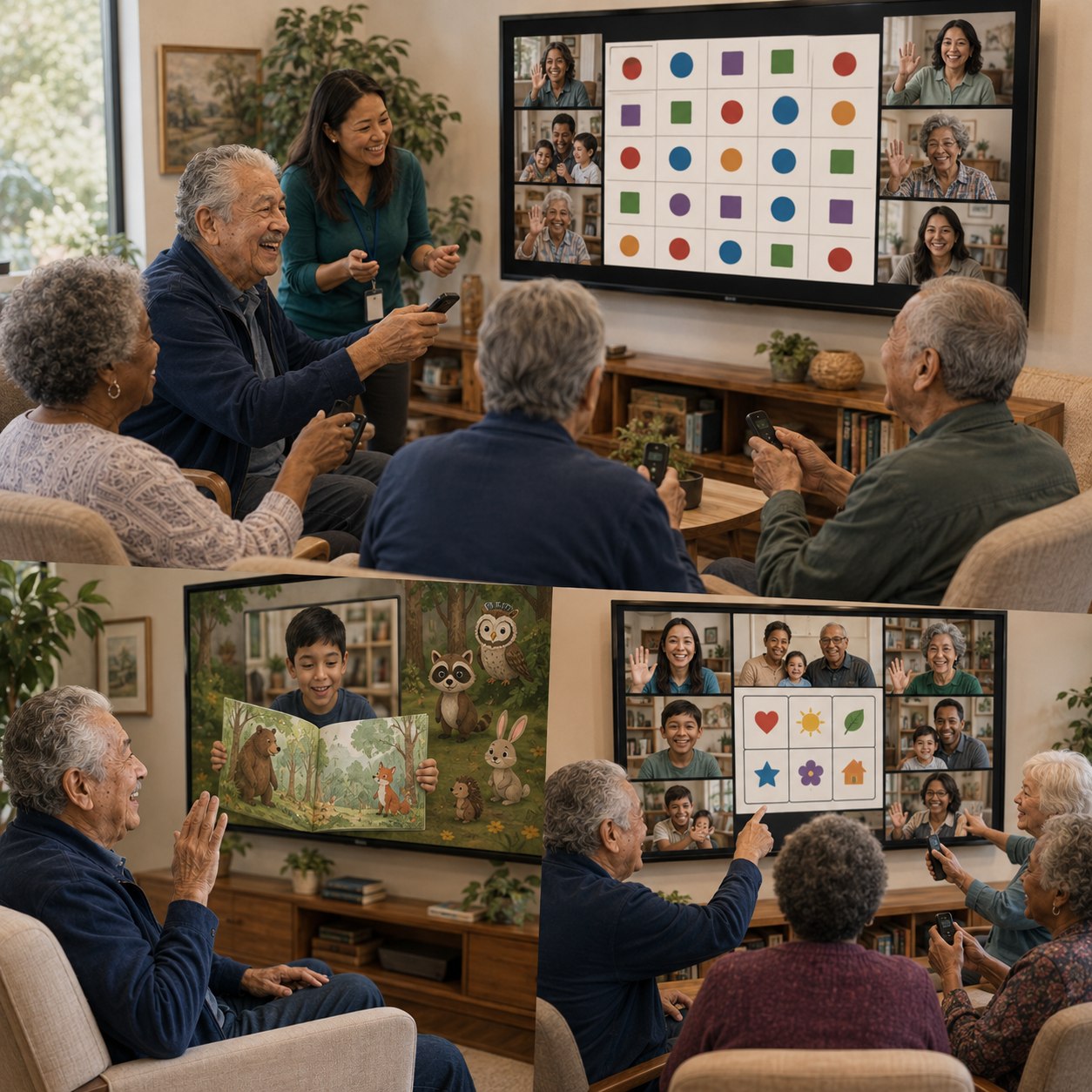
Read, respond, share a conversation or join an activity. Coaching and Mingle can give people a human-led place to take part together.
Authorized teams
Look at recorded participation, questions and feedback. Check what is missing and decide who should follow up.
People using and supporting the program
Agree what needs to change, review the revision and return to the people using it. A useful lesson may be adapted elsewhere without sharing private records.
An illustrative day-center example
Staff use Community Sense in the Partner Portal to prepare for arrivals and record participation. A facilitator uses reviewed content in a shared activity. Staff then check a family-summary draft and share the approved report by PDF or an enabled Care App workflow.
Afterward, the team reviews feedback and participation to consider what to repeat or adjust. This is an example of how the pieces can fit together, not a customer story or a promise of outcomes.
Innovations
Often, the best ideas come from the front line: clinical teams, social workers, caregivers, volunteers, and, of course, participants and patients. They notice the extra step, the missing information, or the small change that could make a day easier. You do not need a technical specification to describe what would help.
Integrated innovation tools help capture that need where it arises. Where enabled, people can work through a suggestion with the genusAI assistant, refine it, and choose what to send for review. The aim is to move focused improvements into workflows in days rather than months. Timing depends on scope, testing, and any privacy, clinical or integration review; not every suggestion will become a feature.
Start with what is happening today, who is affected, and what you would like to be easier. Share the need without including private patient or participant details.
With AI assistance enabled, clarify the need, explore a possible approach, and prepare a clearer suggestion. Review and edit the draft before choosing to submit it; AI does not make that decision for you.
The team reviews the suggestion, asks questions, and decides what is useful and feasible. An agreed change still needs testing and approval before it becomes part of a workflow.
Our approach is to return to the people who raised the need, check whether the change helps, and recognize their contribution with their permission. The original idea and the experience behind it should not be lost along the way.
Shared learning
Participants and caregivers can tell us what is useful and what gets in the way. Partner teams bring the experience of running services. Research and engagement insights add another perspective, but people decide which changes are worth making.
A useful idea in one setting may help another. It still needs review and adaptation to the people, resources, and responsibilities in that community.
Getting started
You might begin with one program, a set of resources, or a co-branded care experience. If you need a dedicated white-label version, custom workflows, or deeper system connections, we can work through the scope together.
The first conversation is about your mission, the people you serve, and what would make their day a little easier. You can start simply and plan further changes as you learn.