
genus perspective
Does the next step work for this person?
A new digital service becomes useful when someone can do what matters to them. NHS England’s digital inclusion framework prompts a practical question: can people find the next step, use it with the support they choose, and reach another route when they need one?
What we found in the news
On September 28, 2023, NHS England published its digital inclusion framework (opens in a new tab). Its publication summary describes digital approaches as:
“complementary to non-digital services and support.”
— NHS England, September 2023
That small phrase leaves room for a useful conversation. A service can offer a digital route while continuing to help someone who chooses another way. The framework is guidance for NHS action, not a study proving that a particular product improves access. Our interest is in what that starting point could mean for an ordinary community service.
Why this matters to us
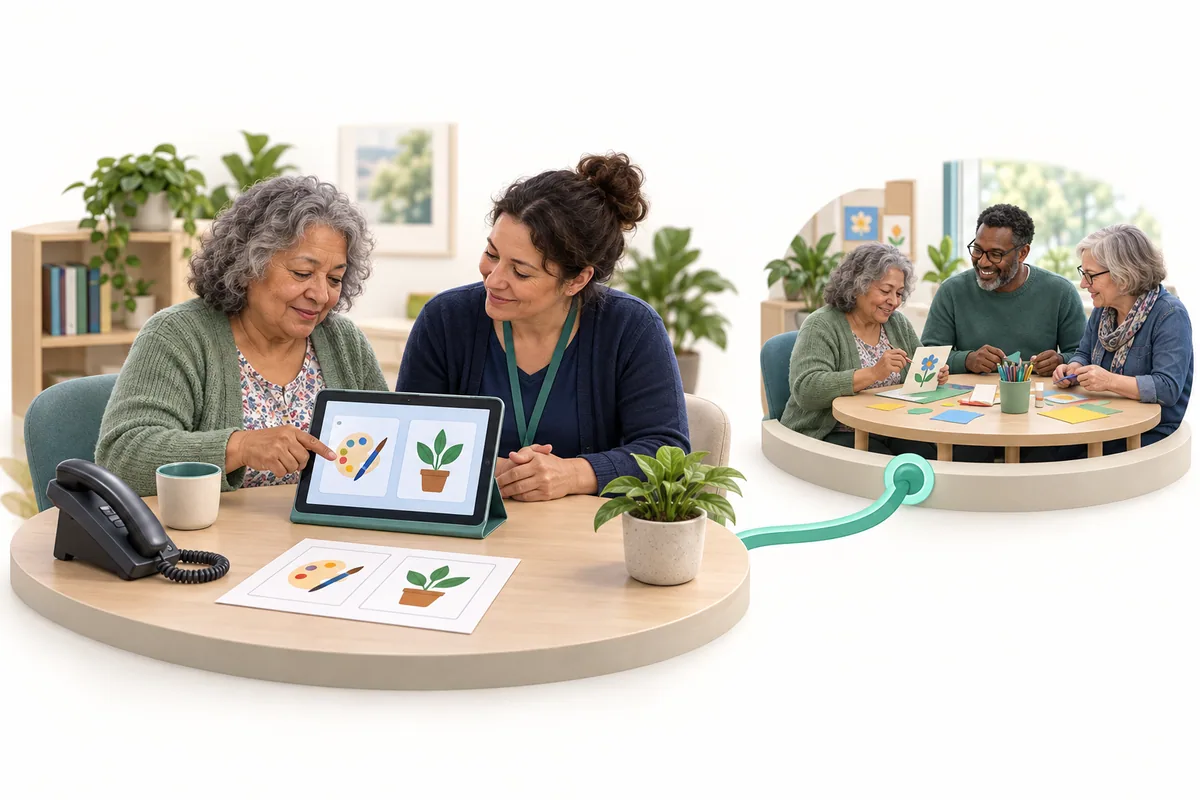
Imagine a visit to a community center. A participant wants to find out whether Thursday’s art group has space. They have a tablet, but the invitation leads to a page with several unfamiliar choices. A staff member could take the device and finish the task. The booking would be complete; what the person needed help with might remain unclear.
We would rather start by asking which part they want to do themselves and where support would be welcome. They may need a clearer link, larger text, a different language, or simply confirmation that they are in the right place. They may prefer a telephone call today.
At genus, this is where technology becomes interesting: in the small decisions that help someone take part on their own terms.
Begin with one task that matters
Choose a real purpose before opening the application. Finding an activity time is specific enough to try. Becoming more digitally engaged is much harder for a participant to do anything with.
Invite people with different access needs to attempt that task using their usual device or preferred route. Give them time to explain what they expect to happen. Notice the point where the words on the screen stop matching the question in their mind.
A page called Program Resources might contain the answer, yet someone looking for Thursday’s art group may never think to open it. Changing that label could be more useful than another demonstration of the whole system.
Include staff who answer the telephone or welcome people at reception. They may know which instructions repeatedly need explaining. Treat those observations as clues to investigate with the people affected.
Make support something people can choose
In our example, the staff member could sit alongside the participant while they try the activity link. The participant keeps hold of the tablet and decides when help is useful. If they ask the staff member to complete a step, that choice deserves respect too.
Agree what happens next time. A short written reminder may help one person; another may want to practice again. A family member can be involved when the participant wants that support, without becoming the automatic operator of someone else’s account.
Support also needs a practical home in the service. Who can help, at what times, and how does a person reach them? A cheerful offer to ask anyone becomes frustrating if every colleague sends the question somewhere else.
Keep the alternative route useful
Check the telephone number and printed information alongside the digital page. They should lead to the same current activity details and an understandable next step.
When arrangements change, decide who updates each route. Otherwise, the person using a paper invitation may arrive at a different time from the person checking the website. That is an information problem the service can fix.
Ask people whether the route they chose worked. A completed online form tells the team something, but it does not show whether someone needed repeated help or gave up before reaching it. Make room for those accounts when reviewing a change.
What this means for the people you serve
A useful choice lets someone participate without having to justify how they prefer to communicate. People receiving support should help shape the invitation, the instructions, and the alternatives. Their contribution may reveal a simpler next step for everyone.
The genus connection
Today, configured genus care apps and care walls can bring together activities, updates, and community resources. The available features and access arrangements depend on the organization, its audience, and the permissions agreed.
That gives a team places to organize information; it still needs to test the actual journey with people. We would start with the task, confirm which configuration supports it, and agree how staff keep other routes current. A platform cannot decide someone’s preferred way to take part for them.
One question for your next team meeting
Could a person using their preferred route find and complete our next invitation—and tell us where it becomes difficult?
Supporting references
- Inclusive digital healthcare: a framework for NHS action on digital inclusion (opens reference preview; direct link opens in a new tab)
NHS England · 2023-09-28
Guidance published September 28, 2023. This article draws on the dated publication summary; the community-center example and proposed checks are genus interpretation.


