
genus perspective
Notice the change and help it reach the right person
A sudden change in someone's attention or behavior needs a clear professional response. NICE’s updated delirium guidance prompts teams to record what changed, when it was noticed and how that information reaches the people responsible for assessment.
What we found in the news
NICE's delirium guideline (opens in a new tab), updated in January 2023, includes this recommendation:
“Ensure that any changes that may indicate delirium are documented”
— NICE, CG103, recommendation 1.5.2, excerpt
The guideline addresses recognition, assessment and management in hospital and long-term care. Its recommendations include professional assessment when relevant changes are observed. We are revisiting the communication around those observations, not offering a way for a blog reader or digital tool to diagnose delirium.
Why this matters to us
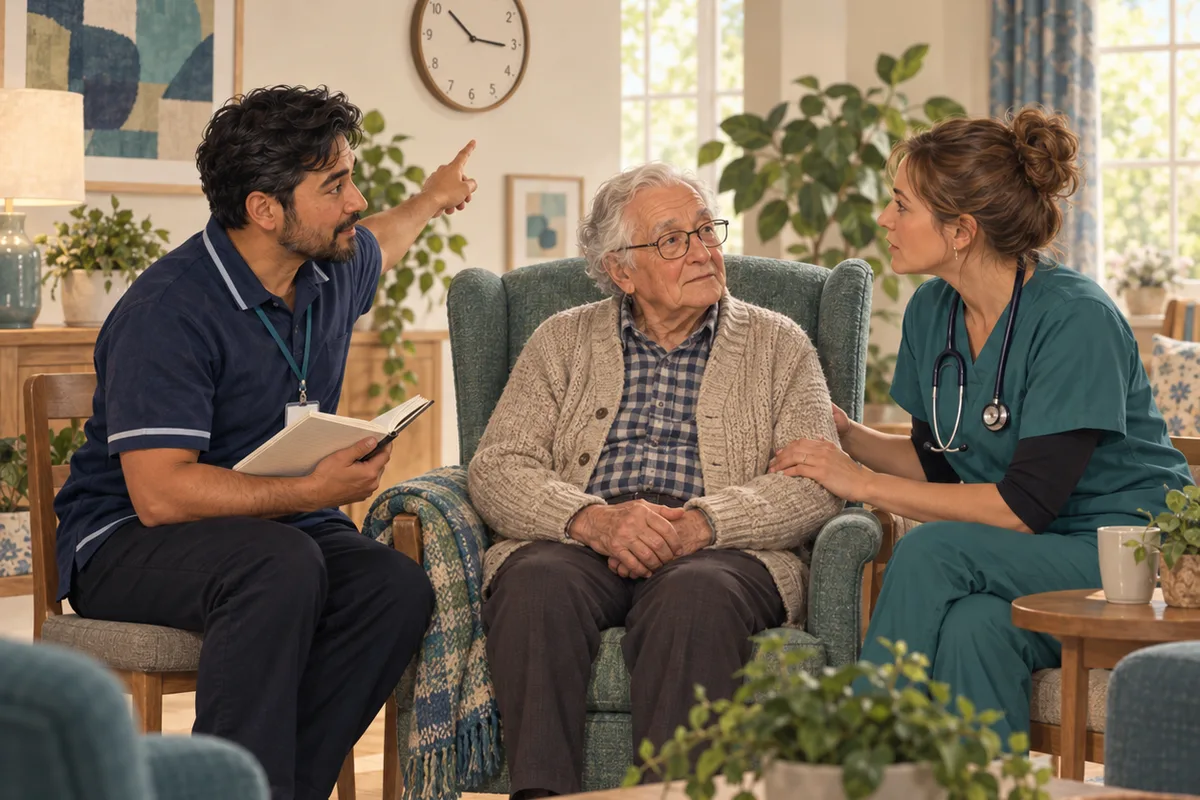
Consider an illustrative care-home situation. A worker who knows a resident notices that their attention and conversation are suddenly different from earlier in the day. A colleague arriving for the next shift does not yet know that this is a change.
The useful information includes what was observed and when. A vague label about the person's behavior can obscure both.
For genus, this is a reminder that ordinary staff observations may carry important context. They need an appropriate route to the professional who can assess the situation, with the person receiving care treated respectfully throughout.
Describe the change without assigning a diagnosis
Follow the service's urgent assessment and escalation procedures for a sudden concerning change. Do not wait for a routine summary or the next scheduled review.
Within the worker's role, record concrete observations and relevant timing. Distinguish what the person said, what someone else reported and what was directly observed.
Avoid assuming that a change is simply part of an existing diagnosis, age or personality. Equally, do not label the person with a new diagnosis because a few features seem familiar. Assessment belongs with a competent professional.
The person may be able to explain something important about how they feel or what has changed. Listen using the communication support appropriate to the situation. A chosen supporter or colleague who knows the person may also contribute relevant baseline information through the proper process.
Make the handoff about action, not just storage
An observation saved in a record is not proof that the responsible person has seen it. Staff need to know who is receiving the concern and what response is expected.
Use the required direct communication and escalation routes. Where an acknowledgment or further action is needed, follow the organization's process for confirming it.
For our illustrative care home, the next worker should understand that a concern has been raised, who has been contacted and what instructions the responsible professional has given. They should not have to infer those details from several separate notes.
If the person moves to another service, the appropriate clinical handoff must include the relevant information. This article does not define that handoff's clinical content; it asks whether the team has a reliable way to carry it.
Review the process after the immediate work
Once the situation has been addressed through the proper care process, managers can review how the observation traveled.
Was the change described clearly? Did staff know the escalation route? Did the receiving professional get the necessary context? Were there avoidable delays caused by an unclear contact or inaccessible record?
Use an appropriate, respectful review process. The aim is to understand the system and improve it, while meeting any incident-reporting responsibilities.
Do not turn the review into praise for a digital feature without evidence. A tool may have helped store information, while timely action depended on a worker noticing, another person responding and a professional making an assessment.
The genus connection
Today, configured genus staff workflows can support recording and reviewing observations. Relevant context can be carried into staff review and subsequent communication, within an organization's enabled modules.
These functions do not diagnose delirium or guarantee that an urgent observation is monitored. A routine note, generated summary or notification must not replace the service's clinical escalation process.
The useful role is to preserve an accurate account alongside the human response. What changed, when it was noticed and what action followed should remain understandable to the authorized team.
One question to take away
If a worker notices a sudden concerning change, do they know the immediate professional route—and how to make the observation clear to the next person?
Supporting references
- Delirium: prevention, diagnosis and management in hospital and long-term care (opens reference preview; direct link opens in a new tab)
National Institute for Health and Care Excellence · 2023-01-18
Guideline updated January 18, 2023. Recommendation 1.5.2 concerns documentation; professional assessment is addressed separately. The article discusses team communication and does not diagnose or prescribe treatment.


