
genus perspective
The help between visits is part of the design
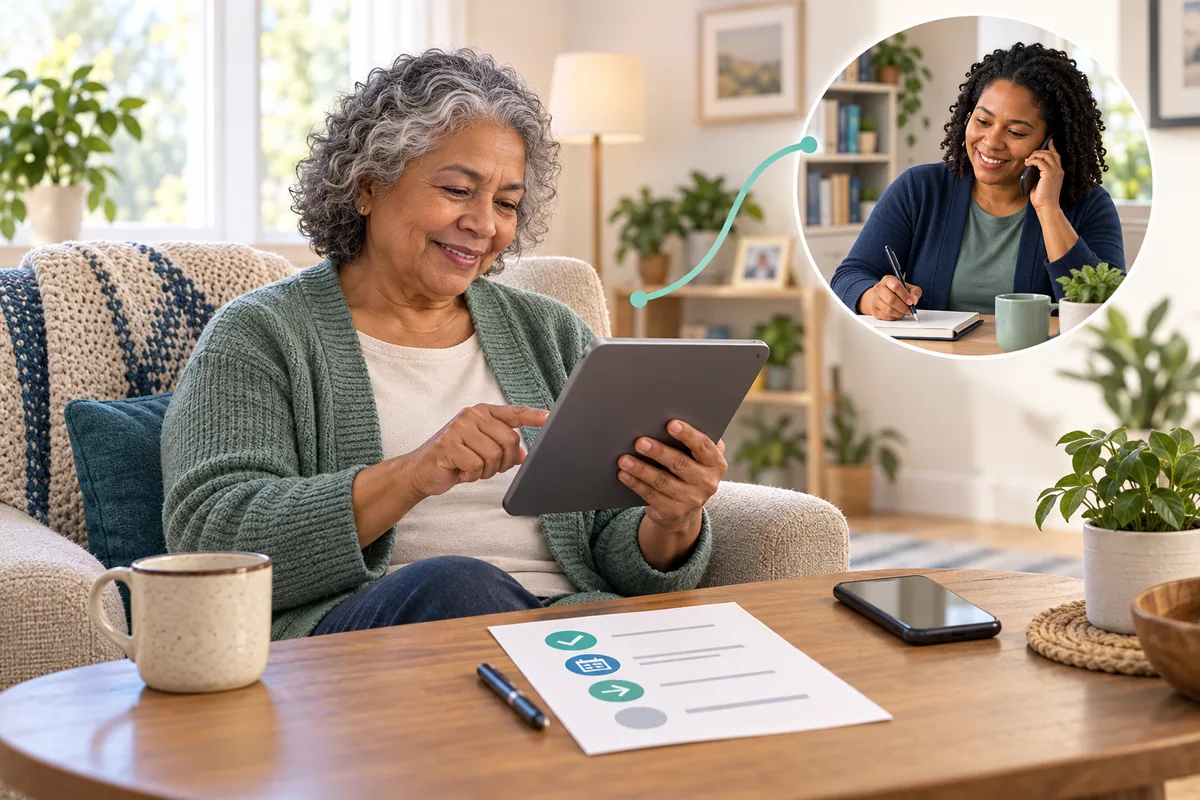
A coach-supported digital prototype highlights a practical service question: what help is available after onboarding? Plan clear contact arrangements, realistic staff time and ways to learn from recurring questions.
What we found in the news
A July 2026 study in the Journal of Medical Internet Research (opens in a new tab) describes the development of ENHANCE, a digital program combining an app with human coaching. Co-design and short usability testing produced a prototype ready for feasibility work. The authors identify questions still to study, including:
“coach workload in routine practice”
The paper does not demonstrate dementia prevention. Testing was brief, and device, language and accessibility limitations remained. What interests us is the service design question within it: how will people get useful help after the introduction, when they are trying something on their own?
Why this matters to us
A first session often happens with someone nearby. There is time to point out a button, explain an unfamiliar word and try again. Later, the person may be at home with a slightly different screen and a question they did not know to ask earlier.
That gap belongs in the design. It is easy to count introductions and overlook the support that makes a second attempt possible. We want the help between visits to be understandable, realistic and shaped by what the person actually wants to do.
Plan the next attempt
Imagine someone learning to find their community program's weekly activities on a tablet. At the first visit, they choose a familiar activity and practice opening its details. They take home a short paper reminder in the format they prefer.
Two days later, they reach a screen they do not recognize. A scheduled call gives them a chance to describe where they stopped. The helper guides them through the step while the person keeps control of the device.
The purpose is specific: finding the activity information they wanted. Agree that next attempt together, including whether they want another call, an in-person check or time to explore independently. Avoid turning support into a series of tasks chosen entirely by the organization.
Make help easy to recognize
A support arrangement should answer ordinary questions. Whom do I contact? When are they available? What can they help with? What should I expect if they cannot answer immediately?
Put that information somewhere the person can find without first solving the problem that brought them there. A paper contact card or a familiar telephone number may be more useful than help hidden behind another sign-in.
Keep the helper's role clear. Someone assisting with navigation can explain the app's steps and connect the person with the right team for other questions. The service should agree how that handoff works, rather than expecting one helpful colleague to answer everything.
Learn from the questions that return
Repeated support requests can reveal a part of the design worth changing. Perhaps a button moved, an explanation is unclear or the same instruction does not fit different devices.
Record the recurring problem with enough context to improve it, without collecting unnecessary personal detail. Bring those patterns back to the people maintaining the content and configuration. Tell helpers when a change has been made so their advice remains current.
Also review the time the support takes. A plan built on an unlimited supply of goodwill is difficult to sustain. Match the offered contact arrangements to actual staffing and revisit them with participants when the service changes.
What this means for the people you serve
People know where to turn without handing over control of their device or assuming they should already understand everything. Families can help where invited, while the organization keeps responsibility for the support it has offered. Staff gain a clearer boundary around their role and a way to turn repeated questions into improvements.
The genus connection
The current care app and public wall (opens in a new tab) provide configured resources, activities and communication. Their usefulness depends partly on how the organization introduces them and supports everyday use.
For a genus setup, plan the first few tasks with intended participants and confirm the available help. Keep support information, instructions and staff knowledge aligned with the actual configuration. A scheduled check-in or familiar printed reminder can be part of the surrounding service. The technology and the people helping someone use it need to make sense together.
One question to take away
When someone gets stuck between visits, can they find useful help without already knowing how to fix the problem?
Supporting references
- ENHANCE (Tailored Intervention for Brain Health and Cognitive Enrichment for Cognitive Health), a Coach-Supported Digital Intervention for Dementia Prevention in Underserved Older Adults: Co-Design and Usability Study (opens reference preview; direct link opens in a new tab)
Journal of Medical Internet Research · 2026-07-29
Co-design and brief usability study of a coach-supported prototype; identifies support and accessibility questions for subsequent evaluation, without establishing prevention outcomes.


