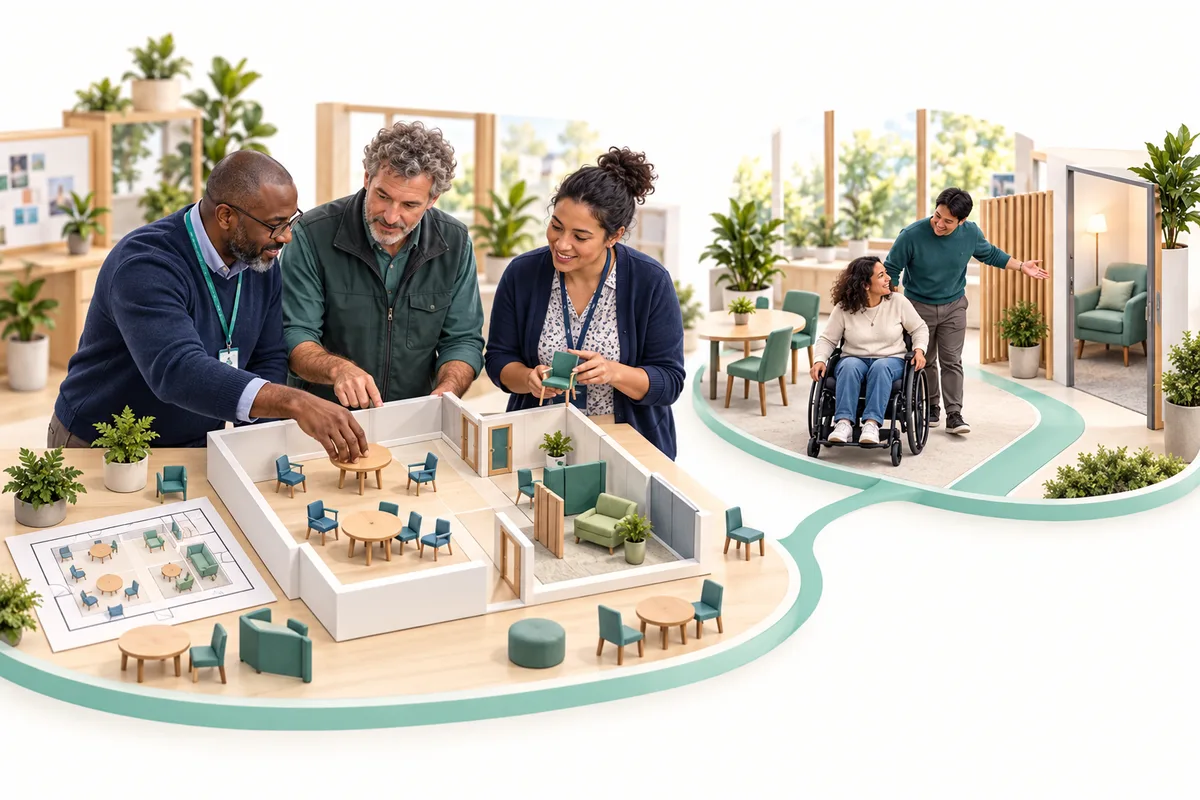
Leave room for people to shape the change
A new process needs time, attention, and a reason people recognize. Invite those doing and receiving the work to shape a small trial, and make room to learn before expanding it.
Observations. Evidence. Ideas.
News, observations, and practical ideas for people who support care. Explore what is changing and what it means for your community.
Explore the research behind our workStart with a topic or a few words, or leave search blank to browse.
Search looks through titles, summaries, authors, and article text. With several words, each word must appear somewhere in the article.
Combine the options below, then choose Find articles. Results must match every option you choose. Leave an option set to All to keep that part open.
An article can belong to more than one theme. Explore what each covers and why we write about it.
Find articles relevant to a community, care setting, or organization. These options include people and partners as well as places:
Choose a perspective that interests you. You can read from any role:
No matches? Try fewer words or remove a filter. Clear filters clears your search and all selected options.
37 articles · Page 1 of 4
A new process needs time, attention, and a reason people recognize. Invite those doing and receiving the work to shape a small trial, and make room to learn before expanding it.
New forms, changing content, and routine updates can introduce fresh barriers. Give accessibility an ongoing place in service ownership, staff support, and the response to user feedback.
A useful service may still be difficult to reach. Bring travel time, arrival arrangements, and the journey home into operational planning with the people who make that trip.
Consistency across locations starts with a clear account of the service being offered. Agree the essentials together while leaving room for the people, resources, and routines of each place.
An available room is not yet a workable service location. Plan around the conversations, activities, access, and daily support that need to happen there before settling the timetable.
Continuity depends on knowledge and authority reaching beyond one familiar person. Use planned absence and leadership transitions to check whether colleagues can carry the work with confidence.
Two accurate-looking reports can describe different work. Before comparing services, agree what the measure includes, how it was recorded, and what decision it can reasonably inform.
A technology outage quickly becomes an operational problem. Agree who makes service decisions, who contacts people, and how the team returns to its normal work after an interruption.
A polished demonstration can leave everyday barriers unseen. Put real tasks, accessibility evidence, and the support people need into the conversation before choosing a digital tool.
People waiting for a place still need a clear way to ask questions, update their circumstances, and understand what happens next. Honest communication belongs in the operational plan.
An annual review can show what the organization did, what people experienced, and what remains uncertain. Keep activity counts distinct from outcomes and give the next year’s decisions a sound starting point.
A helpful directory needs care after launch. Assign ownership for checking service details, make changes easy to report, and distinguish a listed resource from an available or accepted referral.