
genus perspective
A shared interest can be the beginning of a friendship
Research across 16 countries links hobbies with better wellbeing in later life. It invites a practical question for community groups: what might people enjoy doing together, with room to be beginners?
What we found in the news
A UCL-led study published in September 2023 (opens in a new tab) examined hobby engagement among 93,263 people aged 65 and older across 16 countries. Drawing on five longitudinal studies, the researchers found that having a hobby was associated with fewer depressive symptoms and higher reported happiness and life satisfaction.
Discussing the findings, lead author Dr. Karen Mak observed:
“life satisfaction was most strongly linked to hobby engagement.”
— Dr. Karen Mak, UCL research announcement, September 11, 2023 (opens in a new tab)
The study followed participants over four to eight years. Its observational design cannot establish cause and effect, and the studies asked about hobbies in different ways. It examined a broad range of interests, including activities people do alone. It did not show that joining a hobby group guarantees friendship or that one kind of activity suits everyone.
Why this matters to us
Our interest is in what people enjoy, and what becomes possible when they have room to enjoy it with someone else.
A shared activity offers something to talk about without requiring anyone to arrive with a story prepared. There is a plant to compare, a song to choose, a puzzle to consider or a decidedly uneven clay pot to admire. Conversation can grow around what people are doing.
That is our community interpretation, rather than a finding that this study directly tested. We see a useful starting point for program design: ask about the activity before deciding what people need to become. They may want company, a new skill, a familiar pleasure or simply an enjoyable hour.
Start with curiosity, not a full calendar
A community team might begin by asking a few participants what they used to enjoy, what they still make time for and what they have always wanted to try. Keep room for answers that do not fit the existing program.
Then offer one manageable opportunity. Explain what will happen, what materials are available and whether there is a cost. Make it clear when beginners are welcome. A person should not need to buy equipment or demonstrate talent to discover whether an activity appeals.
Ask about practical access, too. Could someone work seated, use a different tool, take a break or bring a companion? A quieter option may suit someone who enjoys making things but finds a crowded room tiring. These choices are worth discussing with participants rather than assuming one arrangement will work for all.
Leave room for the people around the activity
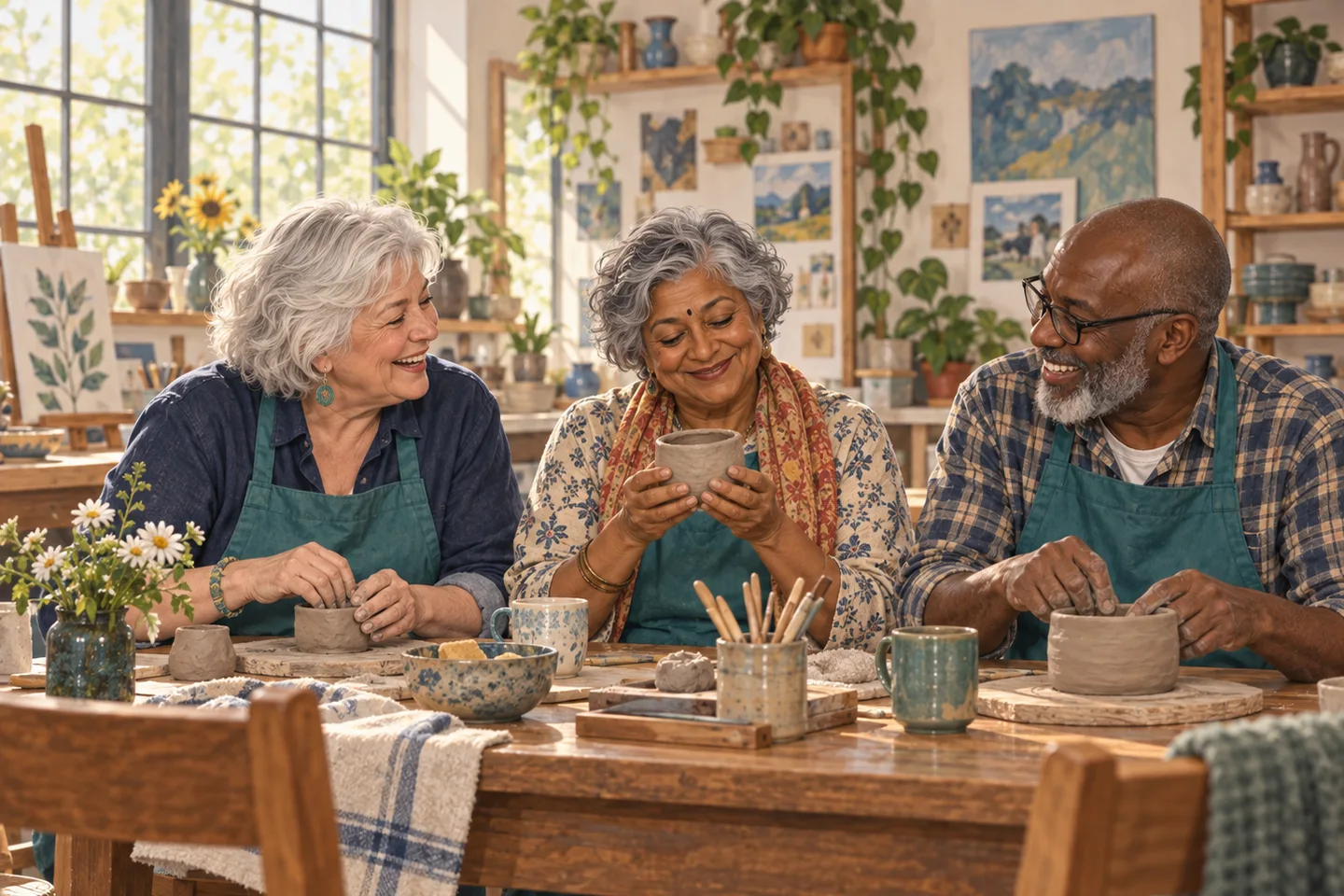
Imagine a small pottery table where everyone is working at their own pace. One person enjoys talking while their hands are busy. Another listens for a while before joining the conversation. A third is absorbed in getting the rim of a bowl just right.
There is no need to turn that into a compulsory round of introductions or a finished-product competition. A host can make materials easy to reach, help people learn names and offer time to pause together. Participants can decide whether they want to share what they have made.
For a family member or friend helping someone explore an activity, a useful first offer may be to go together once. Ask afterward whether they enjoyed it and whether they would like to return. Their answer matters more than filling another place on the calendar.
The genus connection
Today, organizations can use the genusConnect Care App and wall (opens in a new tab) to share activity information and resources, with calendar events and conversations available where enabled.
That can help a group explain the next session, share an agreed plan and keep useful information in one place. The activity and the welcome remain the organization’s work, shaped with the people taking part. Using a platform does not establish the wellbeing benefits measured in a study.
One question to take away
What would people in your community enjoy trying together if they knew they did not have to be good at it?
Supporting references
- Hobby engagement and mental wellbeing among people aged 65 years and older in 16 countries (opens reference preview; direct link opens in a new tab)
Nature Medicine — Hei Wan Mak and colleagues · 2023-09-11
An observational analysis of five longitudinal studies involving 93,263 adults aged 65 and older. Hobby engagement was associated with wellbeing measures; causality and the effects of particular group activities were not established.
- Hobbies linked to lower depression levels among older people (opens reference preview; direct link opens in a new tab)
University College London · 2023-09-11
UCL’s explanation of its researchers’ study, including the quoted comment from lead author Dr. Karen Mak and the caution that observational findings cannot prove causality.


