
genus perspective
Across generations, everyone has something to bring
A small study of intergenerational programmes invites a closer look at participation and choice. We explore shared interests, flexible roles and meetings where different ages can contribute in their own ways.
What we found in the news
A February 2025 study by Heather Emond and Fiona Kelly (opens in a new tab) reports interviews with thirteen stakeholders involved in intergenerational practice or dementia policy in Scotland. Its abstract describes perceived conditions for participation, rather than a controlled test of benefits.
Among the elements discussed were:
“purpose and roles”
— Emond and Kelly, study abstract
Our reflection takes that as a reason to ask what each person would enjoy bringing to an encounter. Age alone should not decide who teaches, helps, listens or learns.
Why this matters to us
An intergenerational activity can begin with a generous idea and still arrive with fixed roles. Older people are expected to share memories; younger people are expected to provide energy or help with devices. Those roles may suit some participants, but they should not be assigned by default.
Our genus perspective is that a shared interest gives people more room to meet one another as individuals. Someone may know a great deal about plants and little about the game on the next table. Another may prefer listening today and leading a small part next time.
The encounter does not need to demonstrate what an entire generation has to offer. It can be an enjoyable activity in which people discover what they would like to do together.
Ask both groups before planning for them
Begin with a few possible activities and ask the intended participants what appeals. A garden project, a simple making session or an exchange of music might work in some settings. These are illustrative ideas; the people and the host’s resources should shape the choice.
Include people living with dementia directly in the conversation, using appropriate support and familiar communication approaches where needed. Family members and staff can contribute useful knowledge without treating their preference as a substitute for the person’s own response.
Describe what will happen before the visit. Explain the setting, the length of the session and the choices available. When children are involved, use the organizations’ actual safeguarding, consent and supervision procedures rather than relying on the warmth of the idea.
Plan an introduction that does not turn one group into an audience for the other. Give people a shared task or interest to notice, with enough room for conversation to develop at its own pace.
Let roles move as the activity unfolds
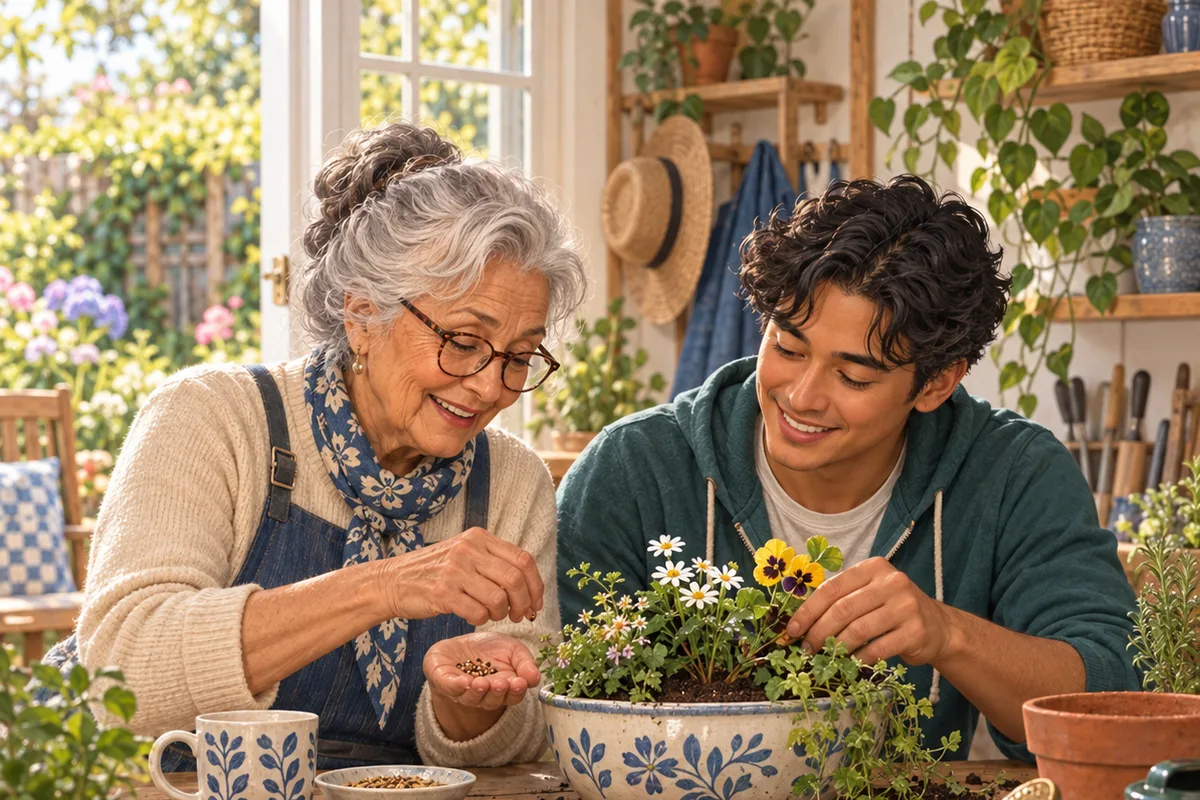
At a small planting table, one person might choose seeds, another fill a pot and another suggest where the plants could stand. Someone can watch and offer an opinion without taking on a physical task. This imagined scene shows how roles can remain flexible.
A facilitator can notice when materials, pace or seating need adjusting. Ask before stepping in. If someone loses interest, offer a different way to take part or a break instead of insisting they finish the planned activity.
Keep contribution separate from performance. Nobody needs to tell a polished story, remember a particular fact or complete a project for the meeting to count as worthwhile. Let participants decide what they want to share.
Afterward, ask both groups what they would enjoy repeating. A host may learn that a shorter session or a familiar activity offers more room for interaction. Treat those responses as local guidance, not proof of the wider outcomes discussed in research.
The genus connection
Today, the genusConnect Care App and wall (opens in a new tab) can hold reviewed media, questions and activity resources, with access to shared experiences available where configured.
That can help a human facilitator prepare material and explain the next visit. The facilitator still chooses what fits the group, follows the host’s procedures and responds to participants. A prepared resource supports the encounter; it cannot determine whether people form a relationship.
One question to take away
If age did not assign the roles, what would the people in your group choose to do together?
Ask both groups before the next session. Leave room for someone to contribute differently from what the plan—or a familiar stereotype—might have expected.
Supporting references
- Stirling: Intergenerational programmes involving people living with dementia (opens reference preview; direct link opens in a new tab)
Dementia — Heather Emond and Fiona Kelly · 2025-02-13
Thirteen stakeholder interviews; perceptions, not an effectiveness trial.


