
genus perspective
Helping from a distance: a clear role can travel
NIA’s long-distance caregiving guidance shows that support is not limited to the people who live nearby. Our takeaway: agree on one useful responsibility, including the follow-through, before adding more messages to the local caregiver’s day.
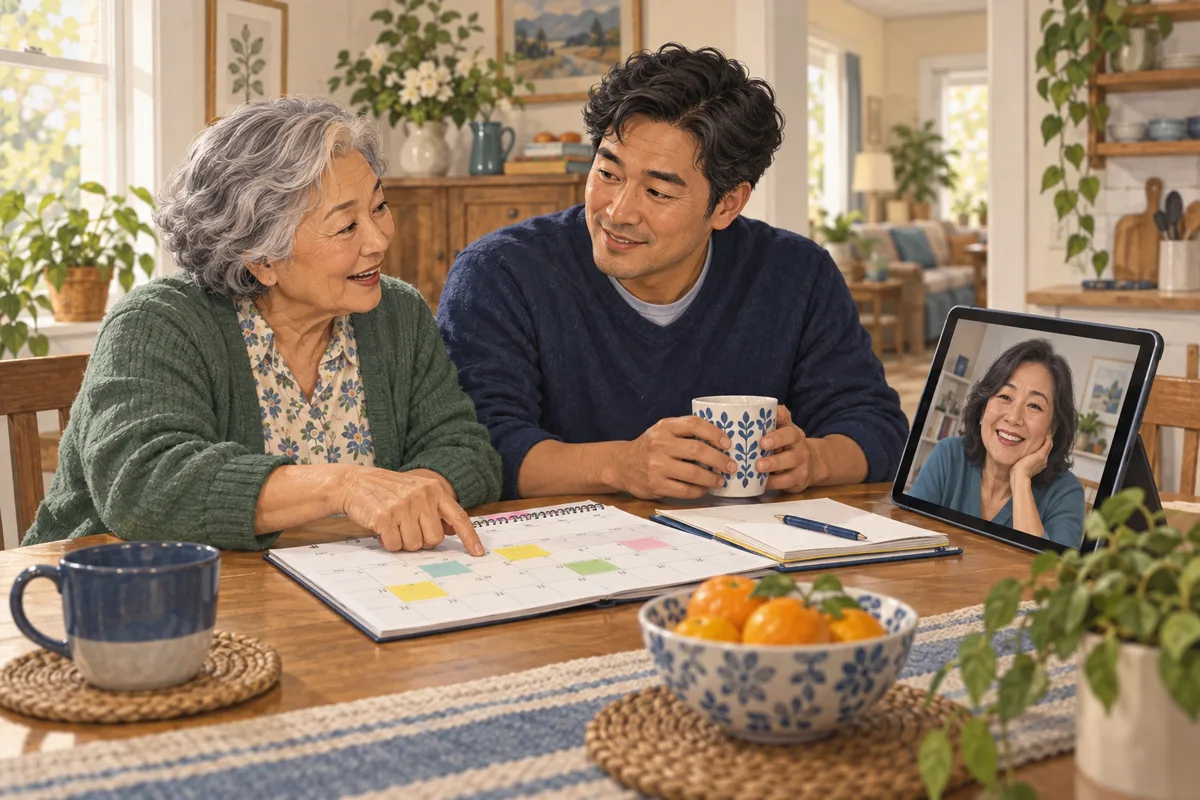
What we found in the guidance
The National Institute on Aging’s long-distance caregiving guidance (opens in a new tab), reviewed October 12, 2023, describes ways relatives can support care from elsewhere. It includes helping with arrangements and information, as well as keeping in touch with the person doing everyday care.
“If you don’t live nearby, you can still provide support and assistance as a long-distance caregiver.”
— National Institute on Aging
The date is the page’s content-review date, not a claimed new research publication. Its suggestions are educational guidance; each family still needs to agree on what is appropriate, wanted and feasible.
Why this matters to us
A relative far away may genuinely want to help but feel unsure where to begin. The person nearby may already be answering enough questions. More requests for updates can add work even when they come from concern.
At genus, we think distance becomes easier to navigate when the offer is specific. A remote helper does not need to take over local decisions. They can take responsibility for an agreed piece of work and bring back something usable.
The person receiving care remains part of that agreement. Being related does not automatically mean having permission to receive private information or make arrangements on their behalf.
Offer an outcome, not another search result
Imagine a family wants to explore a local activity that someone can reach comfortably. A relative elsewhere could offer to find two suitable options, check the basic arrangements and return with a short comparison by an agreed day.
Before starting, settle the boundaries:
- What question are we trying to answer?
- Which preferences and practical limits matter?
- What information may be shared, and with whom?
- Who will make the final choice?
The remote helper can then do the agreed legwork without sending a stream of unchecked links. If the information is incomplete, say what still needs confirming rather than handing back a confident guess.
Also agree on how to close the loop. One concise update may be more useful than repeated messages during a busy day. Keep ordinary family contact separate enough that every call does not become a progress meeting. These are our practical applications of the guidance.
The genus connection
Today, the genusConnect Care App (opens in a new tab) supports enabled tasks, events and conversations for invited community members. Features and access depend on the organization’s configuration.
An agreed responsibility can have a shared place for its next step and completion. Access should reflect what the people involved have agreed to share. The platform does not authorize someone to make care decisions; it can support clearer coordination between those already involved.
One question to take away
What could you carry through from a distance that would leave someone nearby with less to organize?
Supporting references
- What Is Long-Distance Caregiving? (opens reference preview; direct link opens in a new tab)
NIH National Institute on Aging · 2023-10-12
Educational guidance on useful roles, staying connected and supporting a nearby caregiver. The date is the page’s stated content-review date.


