
genus perspective
Making things together, without needing to be good at it
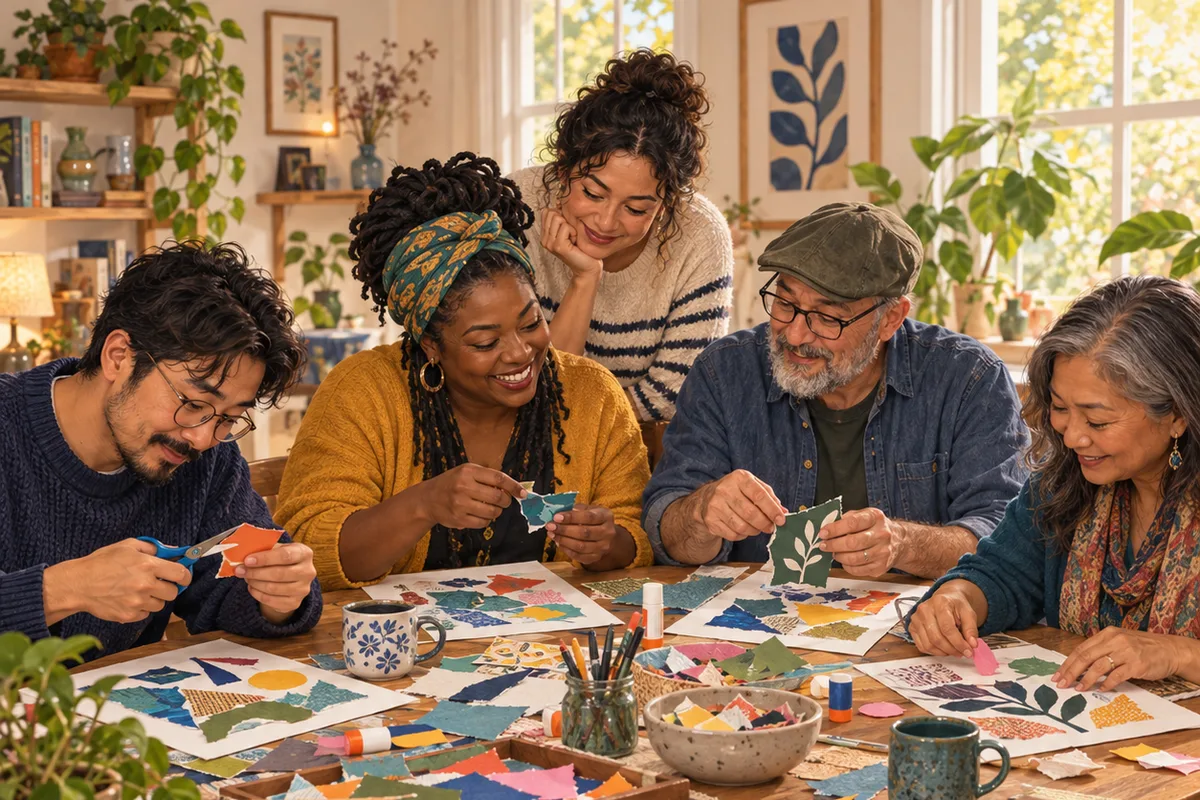
Research on arts and crafts prompts an invitation to make something without a performance to deliver. We explore materials, choice and the enjoyable conversation that may happen along the way.
What we found in the news
Anglia Ruskin University reported in August 2024 (opens in a new tab) that arts-and-crafts participation was associated with reported happiness, life satisfaction and feeling that life was worthwhile in survey data. The observational analysis does not show that a craft session causes these outcomes.
Dr. Helen Keyes described creativity as:
“a meaningful route to self-expression”
— ARU research announcement, August 16, 2024
Our community reflection begins with that room for expression. What could people enjoy making if the finished piece did not have to impress anyone?
Why this matters to us
A demonstration can help someone begin. A perfect example at the front of the room can also become an unspoken standard. A person who has not drawn for years may decide they are already behind before picking up a pencil.
Our genus perspective is that a creative invitation works best when people know what kind of experience is on offer. Is this a taught class, an informal table or time to experiment? Each can be valuable, and each sets different expectations.
For a community gathering, there can be room for a collage that changes direction, a pot that leans or a page that remains half finished. The person making it gets to decide what they enjoy about the process.
Prepare a table that offers real choices
Choose materials that people can use in different ways. Large pieces of paper, several kinds of mark-making tools or ready-cut shapes may offer alternatives without requiring a separate activity for each person. Check what the host can safely provide and explain any materials that need particular handling.
Ask about access rather than guessing. A participant may prefer to work seated, use a different grip, have more space or avoid a material they find unpleasant. Someone may want to watch a demonstration twice. Another may be ready to explore independently.
Make help available without taking over the work. Ask before correcting, completing or displaying someone’s piece. A suggestion can be welcome; an unexpected hand reaching across the page may not be.
Keep the cost clear. If all materials are supplied, say so in the invitation. If something needs to be brought from home, offer a realistic alternative where possible so that equipment does not become an entrance test.
Let making and conversation find their own rhythm
Shared materials can give people something easy to ask about: which color they chose, how a tool works or what they might try next. These are possibilities we see in the activity’s design, not outcomes measured in the study.
A host can make introductions and leave pauses. People do not all need to talk while their hands are busy. Listening, concentrating or working alongside someone can be an entirely valid way to take part.
Avoid a compulsory presentation at the end unless that expectation was clear and participants want it. Offer the choice to show a piece, take it home or leave it unfinished for another visit. Obtain permission before photographing work or people for a public update.
When considering another session, ask what participants would like more time for. They may want a new technique, the same materials or a quieter table. Let the next invitation respond to those details instead of assuming that everyone is ready for a more advanced project.
The genus connection
Today, organizations can share reviewed activity information and resources through the genusConnect Care App and wall (opens in a new tab), with events and community conversations available where enabled.
A host might use that space for a materials note, a short introduction or the next session’s details. The facilitator still chooses the activity with participants and supports the room. Sharing a creative resource does not establish the wellbeing associations found in the research.
One question to take away
What could your group enjoy making if nobody had to display it or be good at it?
Try one invitation that welcomes beginners, explains the materials and makes watching a comfortable option. Ask afterward which part people would choose to do again.
Supporting references
- ARU: Arts and crafts and wellbeing (opens reference preview; direct link opens in a new tab)
Anglia Ruskin University · 2024-08-16
Observational arts participation findings; no causal estimate.


