
genus perspective
Small acts can make a community feel more welcoming
An offered chair or quiet introduction can make room for someone to join. Drawing on a 2023 poll, we reflect on thoughtful offers, comfortable choices and everyday community life.
What we found in the news
The American Psychiatric Association’s November 2023 Healthy Minds Poll (opens in a new tab) turned attention to ordinary kindness. Morning Consult surveyed 2,210 adults from October 16 to 19. Among respondents, 89% said showing someone kindness made them feel at least a little better; 90% said the same about receiving it.
In the accompanying announcement, APA CEO and Medical Director Dr. Saul Levin noted that:
“little gestures become meaningful in bolstering us in the day-to-day.”
— Dr. Saul Levin, American Psychiatric Association, November 8, 2023
The poll records what respondents said about their feelings. It does not establish lasting health effects, prove that kindness reduces loneliness or test a community program. Its modest, useful prompt is to notice gestures that can otherwise pass without much attention.
Why this matters to us
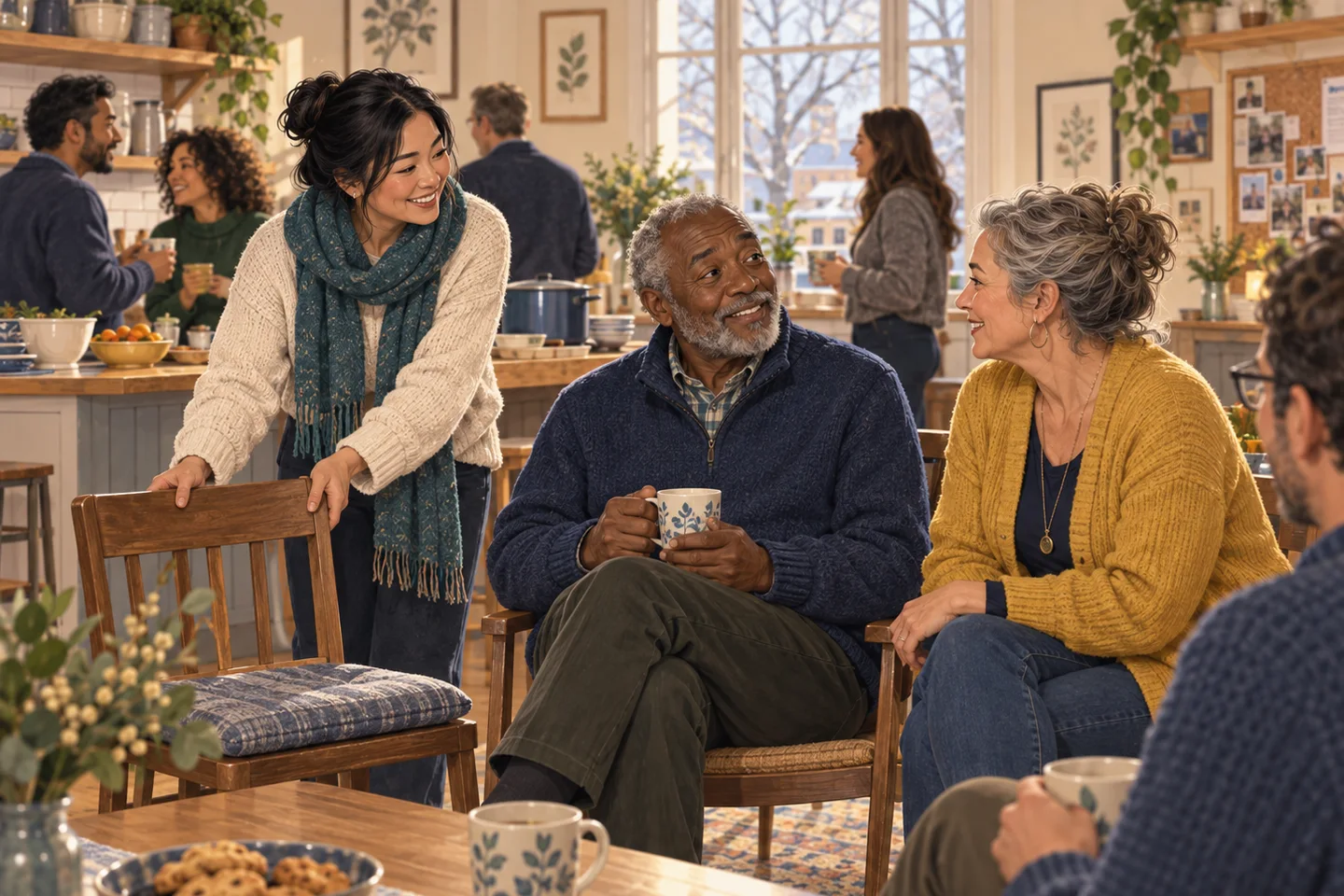
Our genus perspective is that a welcome is made through actions people can recognize. Someone makes space in a conversation. A neighbor explains where an activity is happening. A regular participant offers a chair and waits to see whether it is wanted.
These gestures do not require a person to announce that they feel lonely or need help. They can open a small opportunity to join. The offer matters; so does the freedom to decline it.
For a community center or volunteer group, this turns kindness into a practical question about the experience people have together. Are we paying attention? Are our offers useful? Do we leave room for people to tell us what would suit them?
Offer something specific, with room for choice
An open-ended offer can be hard to answer, especially between people who have just met. Consider a simple option instead: would it help to move a chair closer, show someone where coats go or introduce them to the person hosting the activity?
Wait for the response. Someone may prefer the seat they already have, or want a little time before joining a group. Accepting that answer is part of the welcome.
A small kindness can also be an act of explanation. If everyone else seems to know the routine, quietly saying what will happen next may help someone find their bearings. There is no need to draw attention to their uncertainty or turn the moment into a public display of generosity.
These are our suggestions for everyday community life, not interventions evaluated by the poll.
Let welcome travel in both directions
People who receive support also bring interests, humor and ways of caring about others. They may want to offer a welcome themselves. Ask, and allow the answer to be no.
An invitation to help should have a clear shape: a small role, an understood time and someone to contact if plans change. Avoid letting the same willing person quietly become responsible for every arrival, every cup of tea and every empty chair.
People also deserve a place when they cannot contribute, or simply want to take part. Gratitude, volunteering and cheerfulness are not entry requirements. A community can value the person who comes to listen just as much as the person who sets out the tables.
The genus connection
Today, the genusConnect Care App (opens in a new tab) supports events, tasks and conversations for invited community members where those features are enabled.
When an offer involves follow-through, the people involved can use those tools to record what they agreed and communicate a change. An organization’s public wall can share useful activity information and ways to find local resources. Configuration and permissions shape what is available.
Our purpose is to help useful information and agreed support reach the people who need it. The thoughtful gesture still belongs to the people making it.
One question to take away
What is one small, welcome gesture you could offer at your next gathering—and how will you leave room for the other person’s choice?
Supporting references
- New Poll: Small Acts of Kindness Make Most Americans Feel Better (opens reference preview; direct link opens in a new tab)
American Psychiatric Association · 2023-11-08
A Healthy Minds Poll announcement reporting responses from 2,210 adults surveyed October 16–19, 2023. It describes self-reported feelings about giving and receiving kindness, rather than causal or lasting health effects.


