
genus perspective
When caregiving becomes everyday life, support should too
AARP and the National Alliance for Caregiving’s 2025 report shows how many families are providing care. Our takeaway: start with a shared picture of the everyday work and the people who can help.
What we found in the news
AARP and the National Alliance for Caregiving’s Caregiving in the US 2025 report (opens in a new tab) estimated that 63 million U.S. adults had provided family care during the preceding year.
Its definition includes care for adults and for children with medical conditions or disabilities. Some family caregivers receive payment; the total should not be described as 63 million unpaid caregivers.
“A family caregiver can be anyone, and each caregiving story is unique.”
— AARP and National Alliance for Caregiving, Caregiving in the US 2025
The report describes people’s caregiving circumstances. It does not measure the effectiveness of genus or another coordination platform.
Why this matters to us
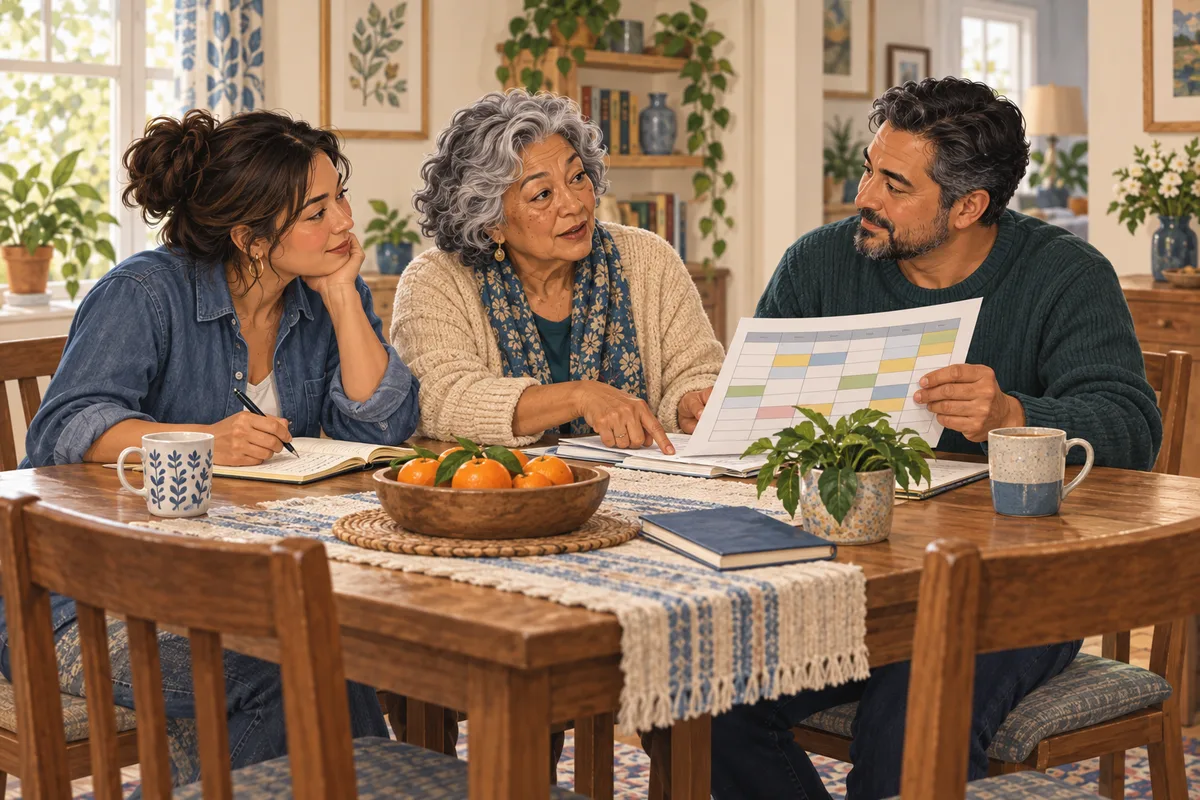
Families can start doing the work of a care team long before they use the word “caregiver.” One person gives rides, another checks in, and someone quietly keeps track of everything that has not yet been done.
For genus, the important idea is recognition: everyday contributions should be easier to see and discuss. A shared picture can make a conversation about help more concrete, while leaving the person receiving care in charge of their preferences.
Start with the next seven days
Try a short family conversation:
- What does the person want help with this week?
- Which tasks are already covered, and which still need an owner?
- What can each person realistically commit to?
- Where would outside support be more appropriate?
Include less visible work, such as arranging appointments or checking whether a plan has changed. Keep the list small enough that people can actually use it.
The genus connection
Today, genusConnect’s Care App (opens in a new tab) brings enabled community conversations, events, tasks, photos and resources into one place for invited members. Features and access depend on the organization’s configuration.
Those capabilities can support the family’s agreed coordination routine. Our design priority is a next step people understand and a place they can return to—not a promise that software removes the financial or emotional demands of care.
One question to take away
If everyone in your care circle described next week’s plan, would they describe the same plan?
Supporting references
- Caregiving in the US 2025 — Prevalence of Caregiving (opens reference preview; direct link opens in a new tab)
AARP and National Alliance for Caregiving · 2025-07-24
Original report section defining and estimating family caregiving prevalence. The 2025 survey includes some paid family caregivers; the findings describe caregiving circumstances, not product outcomes.
- Caregiving in the US 2025 (opens reference preview; direct link opens in a new tab)
AARP Public Policy Institute and National Alliance for Caregiving · 2025-07-24
Publisher’s report page, publication date and links to the complete report and supporting materials.


