Steps 4 and 5
Arrival, attendance, and the activity room: the writing happens where you already are
At the door: present, no-show, checkout, or drop-in, with arrival mood and a check-in score. In the room: activities, observations, support given, team notes, and photos, captured close to the moment, not reconstructed at day’s end.
Fast Entry is how a group activity goes in once for everyone who was in it. Select all, one choice, then a button that reads Save for 14. Time comes preset (now, five minutes ago, ten, an hour, or exact), and mood, a note, and a review flag stay folded away until you want them. Everyone still gets their own entry, held together by a batch id, so one person can be corrected without touching the rest. Above eight people the screen says out loud that emotion will go down as a group note unless you set individuals. Advice, never a block on saving.
The emotion dial is an observation aid, not a diagnosis. Six families of feeling with one detail each, and an Unable to tell option. If nobody could tell how someone was, staff write that they could not tell. It stores nothing rather than storing a guess.
- Team notes can target internal staff or a family-safe audience
- Prior days stay reviewable, so patterns build over time
- Daily exports as CSV, JSON, or PDF
- The readiness check shows what is still unwritten while the person who was there can still write it. It waits to be opened. It will not chase you.
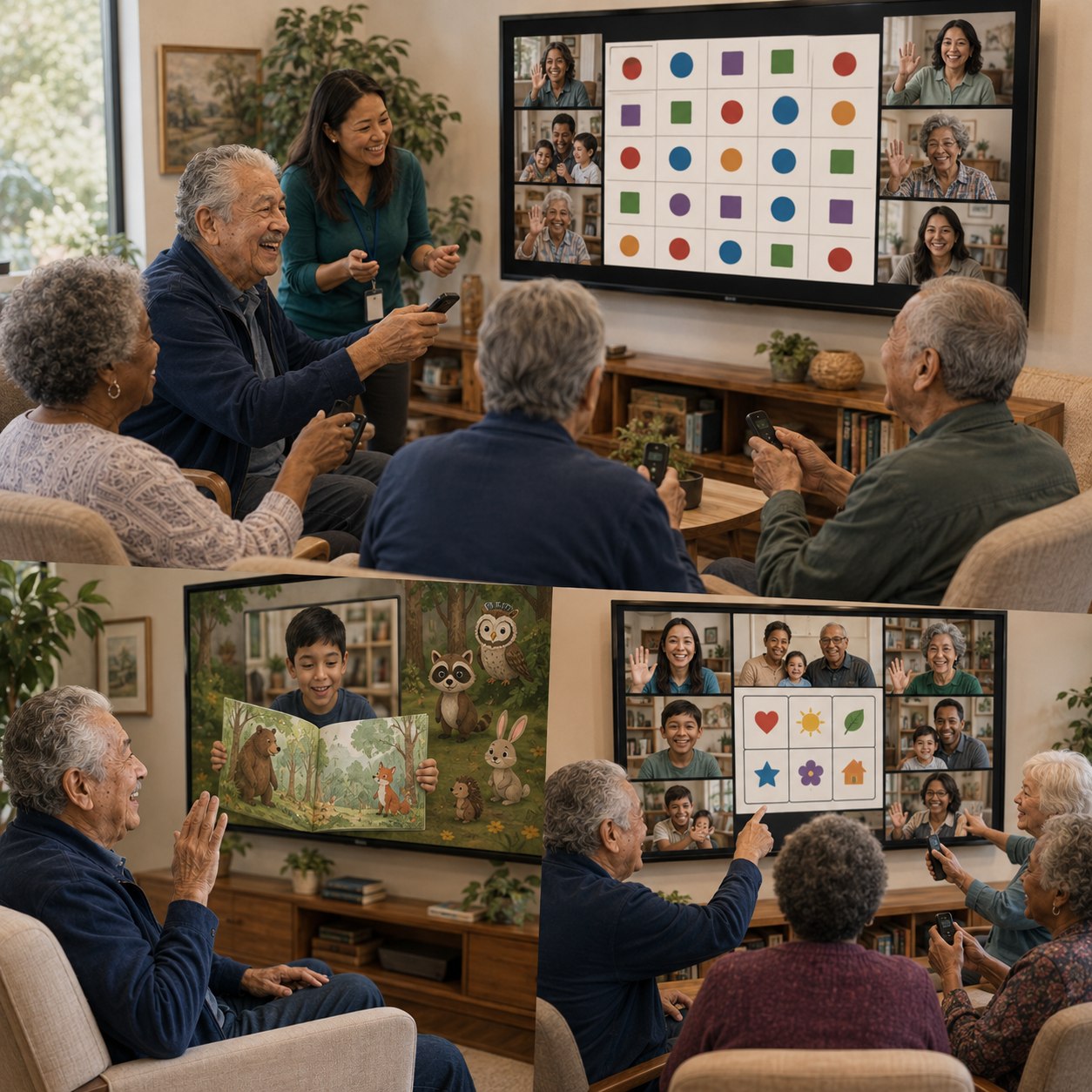
Big Screen runs games, music, and prompts on a shared display; the console stays with staff. Pretty Paper prints bingo cards, matching games, and caller keys for the screen-free tables.